Electrical Energy Calculator
Calculate electricity use from power and duration, or constant DC voltage and current. Compare energy use over different operating times in watt-hours, kilowatt-hours and joules.
Open tool
Interactive calculation is unavailable until JavaScript loads. The formulas and reference information below remain available.
Estimate half-wave dipole and quarter-wave monopole element lengths from frequency and a velocity (shortening) factor.
Enter the operating frequency and choose kHz, MHz or GHz.
Keep the shortening factor at 0.95 for bare wire, or enter the value your antenna or wire maker gives. The slider moves it from 0.5 to 1.
Choose Half-wave dipole or Quarter-wave monopole, and the length unit.
Read the element length; for a dipole the table also gives each leg. The diagram shows where each length is measured.
Cut the element slightly long and trim it while measuring resonance or SWR. Copy result copies the lengths; Reset restores the starting values.
An antenna resonates when its length is a set fraction of the wavelength. The free-space wavelength is the speed of light divided by the frequency.
A half-wave dipole is a centre-fed conductor about half a wavelength long, split into two quarter-wave legs. A quarter-wave monopole is a single quarter-wave rod above a conducting ground plane, which acts as an electrical mirror for the missing half.
Real elements resonate a few percent shorter than the free-space fraction. The current cannot drop to zero exactly at the wire tips (the end effect), thicker conductors shorten more, and insulation slows the wave. The shortening factor k captures this: about 0.98 for very thin wire down to about 0.94 for thick tubing, with 0.95 a common starting value.
The amateur-radio rule "468 divided by the frequency in MHz gives a dipole length in feet" is the same formula with k about 0.9516.
Limitations: height above ground, nearby metal, the feed line, enclosures and plastic covers all shift resonance, so treat the result as a starting length. At low frequencies the length is correct but may be impractically long; such antennas are usually electrically shortened, which this tool does not model.
Wavelength: λ = c ÷ f. c = 299 792 458 m/s, f is frequency in Hz, λ is in metres.
Half-wave dipole: L = k × λ ÷ 2, total tip to tip; each leg is k × λ ÷ 4. k is the shortening factor.
Quarter-wave monopole: L = k × λ ÷ 4, measured from the ground plane.
Feet rule: L(ft) = 468 ÷ f(MHz) is the dipole formula with k ≈ 0.9516.
146 MHz, k = 0.95, half-wave dipole: 0.9754 m total, 0.4877 m each leg. λ = 299 792 458 ÷ 146 000 000 = 2.053 m; × 0.95 ÷ 2.
433 MHz, k = 0.95, quarter-wave monopole: 0.1644 m (16.44 cm). A common starting length for a 433 MHz whip on a ground plane.
2.4 GHz, k = 1: Dipole 6.246 cm, monopole 3.123 cm. k = 1 gives the free-space fractions; a real element is a few percent shorter.
7.1 MHz, k = 0.95, dipole, feet: 65.8 ft. The 468/f rule gives 65.92 ft because it uses k ≈ 0.9516. Both are starting lengths.
Available now
Calculate electricity use from power and duration, or constant DC voltage and current. Compare energy use over different operating times in watt-hours, kilowatt-hours and joules.
Open tool →Available now
Add up to 20 resistors in series using Ω, kΩ or MΩ for circuit analysis and electricity calculations, with a diagram and running total.
Open tool →Available now
Convert absolute temperatures between Celsius, Fahrenheit and kelvin.
Open tool →Nice audio board working as expected.
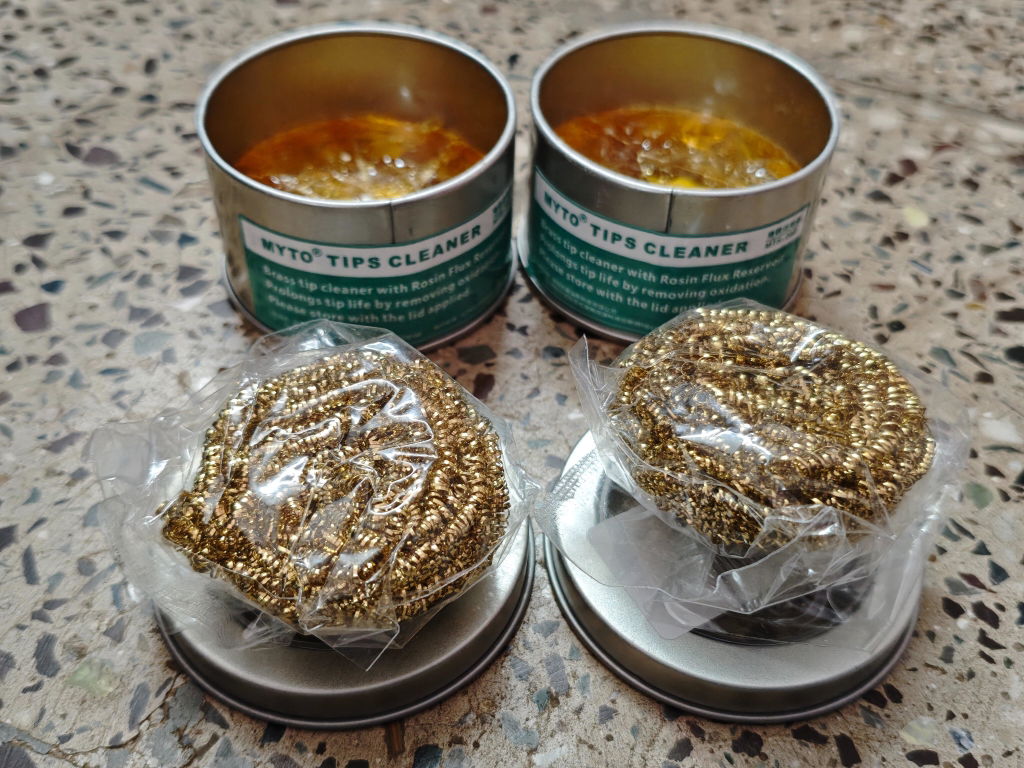
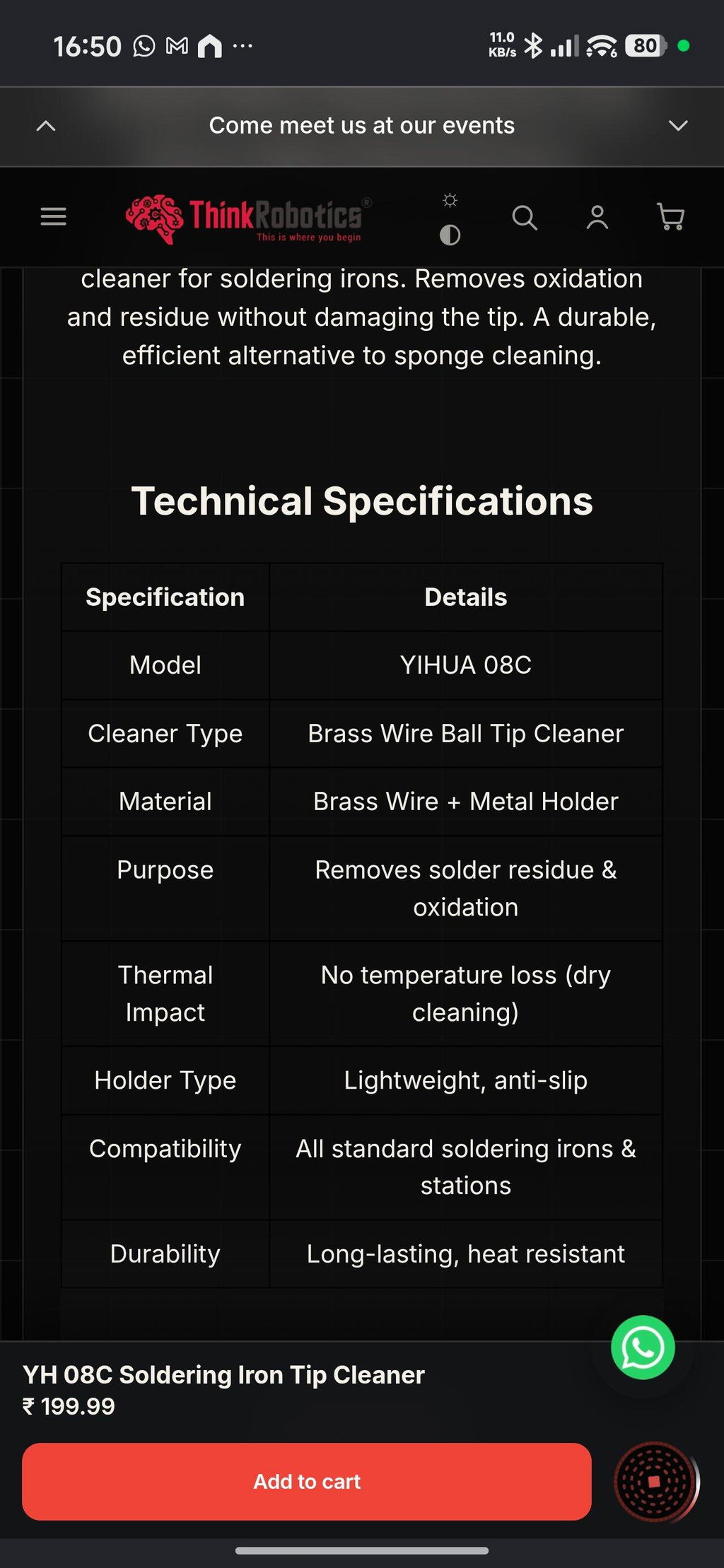
Given the fact that this was my first purchase and I made it thinking I was buying genuine Yihua products, this has been a setback. I received a lesser known OEM brand called MYTO and while both the products seem to be similar from appearance, my real contention is the quality and quantity of the brass wool. On top of that not informing the customer about the unavailability of the Yihua product and instead sending a product from a different brand is also antagonising. Henceforth, I might just have to think twice before ordering from ThinkRobotics.
TOF MINIF Range Sensor - UART TOF Time-of-Flight Laser Range Sensor
We are disappointed with our recent order experience. We clearly communicated our requirement for 433 MHz antennas on WhatsApp, but the issue remains unresolved. We have been following up for more than 10 days and are still waiting for a proper refund resolution.
As a regular B2B customer, we expected better support. This experience has affected our trust in ThinkRobotics, and we may have to consider other suppliers for future purchases. We request a fair and prompt refund.
Anodised Aluminium Cup Head Washers (Pack of 10)