Electrical Energy Calculator
Calculate electricity use from power and duration, or constant DC voltage and current. Compare energy use over different operating times in watt-hours, kilowatt-hours and joules.
Open tool
Interactive calculation is unavailable until JavaScript loads. The formulas, worked examples and references below remain available.
Calculate the overall ratio of a one- to three-stage spur gear train from tooth counts, with output speed, torque and rotation direction.
Choose the number of stages. In a compound train, each stage's driven gear shares a shaft with the next stage's driver.
Enter the tooth counts of the driver and driven gear for each stage.
Optionally enter the input speed, or drag the speed slider, and the input torque and an overall efficiency.
Read the overall ratio, output speed, output torque and direction. The diagram draws each pair with circle sizes in proportion to tooth count and labels each shaft's speed and direction.
Copy result copies the ratio and outputs. Reset restores the starting example: a 12-tooth gear driving a 36-tooth gear at 1500 RPM and 0.5 N·m, with 100% efficiency.
Meshing gears move the same number of teeth past the contact point, so a gear with three times as many teeth turns one third as fast. The ratio is driven teeth divided by driver teeth.
In a compound train the stage ratios multiply. Two 3 : 1 stages give 9 : 1, not 6 : 1.
Power in equals power out plus losses. When speed falls by the ratio, torque rises by the same ratio, minus friction losses that the efficiency accounts for. Each spur mesh typically loses a few percent.
Each external mesh reverses direction. An idler gear between two gears reverses direction again but does not change the ratio, so it is not entered as a stage.
Assumptions and limitations: external spur or helical gears on parallel shafts, with one overall efficiency you supply. Planetary, worm, bevel and internal gears are not modelled; tooth strength, backlash, module and centre distance are not checked. Spur gears under about 12 teeth usually need profile shift to avoid undercut. Belts, pulleys and chains have their own tools.
Stage ratio: i = z_driven ÷ z_driver
Overall ratio: i = i1 × i2 × i3
Output speed: N_out = N_in ÷ i, in RPM; ω = 2π × N ÷ 60 in rad/s
Output torque: T_out = T_in × i × η, η efficiency as a fraction
Direction: Each external mesh reverses rotation; an even number of stages keeps the input direction
One stage, 12 teeth driving 36; 1500 RPM; 0.5 N·m; 100%: 3 : 1 reduction; 500 RPM; 1.5 N·m; opposite direction. 36 ÷ 12 = 3. Speed divides by 3 and torque multiplies by 3.
Two stages, 10 → 50 and 15 → 45; 3000 RPM: 15 : 1; 200 RPM; same direction. 5 × 3 = 15. Adding the stage ratios (8) is a common mistake.
One stage, 40 teeth driving 10; 1000 RPM; 2 N·m: 1 : 4 speed increase; 4000 RPM; 0.5 N·m. A larger driver speeds the output up and reduces its torque.
KHK Gear Technical Reference: Gear Trains
OpenStax University Physics Volume 1, 10.8 Work and Power for Rotational Motion
NIST Guide to the SI, Appendix B.8: Factors for Units Listed Alphabetically
Available now
Calculate electricity use from power and duration, or constant DC voltage and current. Compare energy use over different operating times in watt-hours, kilowatt-hours and joules.
Open tool →Available now
Add up to 20 resistors in series using Ω, kΩ or MΩ for circuit analysis and electricity calculations, with a diagram and running total.
Open tool →Available now
Convert absolute temperatures between Celsius, Fahrenheit and kelvin.
Open tool →Nice audio board working as expected.
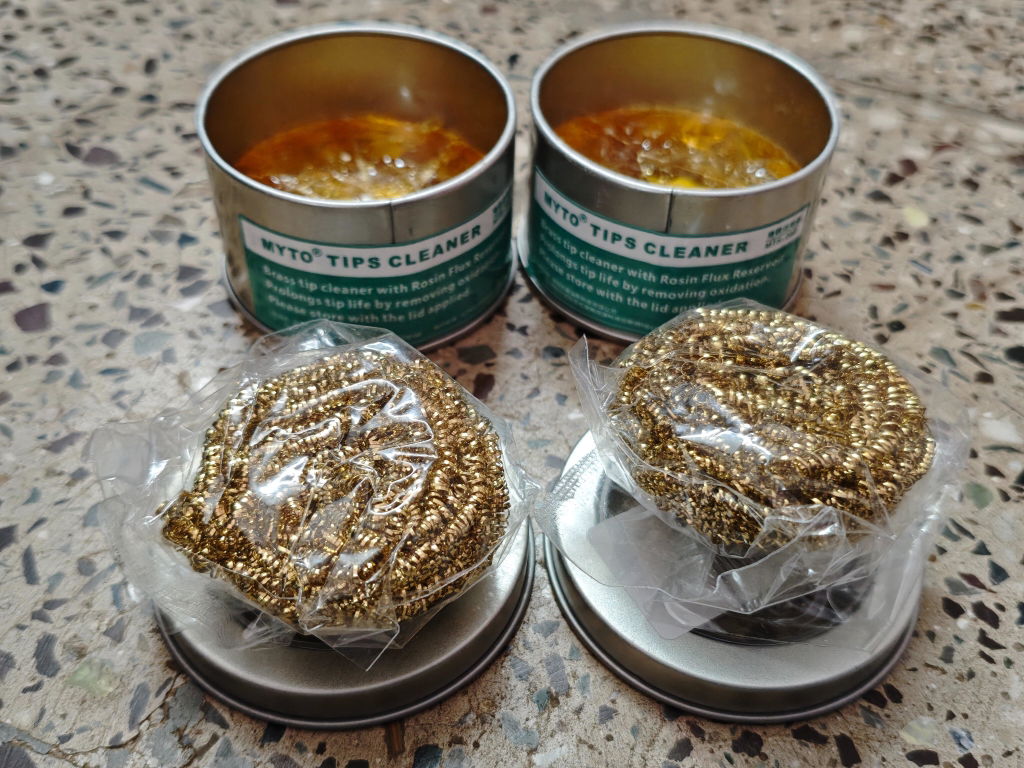
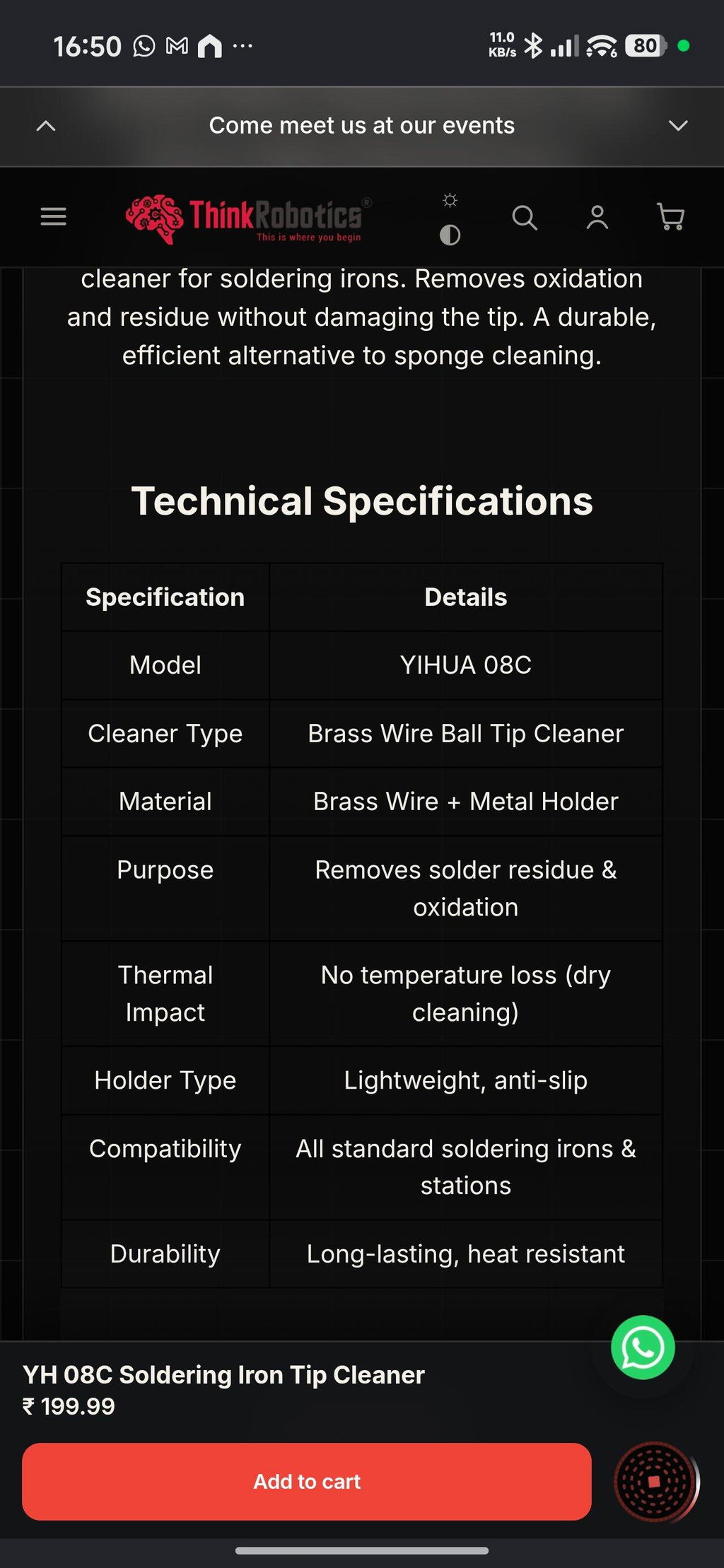
Given the fact that this was my first purchase and I made it thinking I was buying genuine Yihua products, this has been a setback. I received a lesser known OEM brand called MYTO and while both the products seem to be similar from appearance, my real contention is the quality and quantity of the brass wool. On top of that not informing the customer about the unavailability of the Yihua product and instead sending a product from a different brand is also antagonising. Henceforth, I might just have to think twice before ordering from ThinkRobotics.
TOF MINIF Range Sensor - UART TOF Time-of-Flight Laser Range Sensor
We are disappointed with our recent order experience. We clearly communicated our requirement for 433 MHz antennas on WhatsApp, but the issue remains unresolved. We have been following up for more than 10 days and are still waiting for a proper refund resolution.
As a regular B2B customer, we expected better support. This experience has affected our trust in ThinkRobotics, and we may have to consider other suppliers for future purchases. We request a fair and prompt refund.
Anodised Aluminium Cup Head Washers (Pack of 10)