Electrical Energy Calculator
Calculate electricity use from power and duration, or constant DC voltage and current. Compare energy use over different operating times in watt-hours, kilowatt-hours and joules.
Open tool
Calculation needs JavaScript. The guide below remains available.
Convert length, area, volume, mass and elapsed time using clearly named metric, US customary and imperial units.
Choose the kind of quantity, then enter its value and select the source and target units.
Read the converted value and unit. Source-unit changes reinterpret the entered number; Swap units reverses the conversion while preserving the same quantity.
The aligned scales show two labels for the same quantity. Adjust the visible range or choose Fit value to include your reading; range changes do not change the answer.
Copy result includes both values and unit names. Show the steps explains the factor used. Reset clears the input and restores this calculator's starting quantity, units and visual range.
A conversion changes how a quantity is expressed, not the quantity itself. This tool multiplies by the source unit's canonical factor and divides by the target unit's factor.
Area and volume units use squared and cubed length factors. One metre is 100 centimetres, one square metre is 10,000 square centimetres, and one cubic metre is 1,000,000 cubic centimetres.
US liquid and imperial gallons are different sizes. Fluid ounces measure volume; avoirdupois ounces measure mass. Converting between volume and mass would require a material density and is outside this tool.
Feet, yards, miles and acres here use the international foot. US survey units are excluded. A day means exactly 24 hours and a week means seven such days, not a calendar or time-zone calculation.
Defined conversion factors are exact, but calculations use floating-point arithmetic. Rounding does not increase measurement accuracy. Signed results can describe changes; a negative number does not establish a physically possible negative magnitude.
General conversion: target value = source value × source factor ÷ target factor. Factors are quantities of the category's canonical unit (m, m², m³, kg or s) per one selected unit.
Area scaling: square-unit factor = length-unit factor²
Volume scaling: cubic-unit factor = length-unit factor³
25.4 mm: 1 in. Divide the millimetre value by 25.4; this is a length conversion.
1 m²: 10,000 cm². Square the 100-to-1 length ratio.
1 US liquid gal; 1 imperial gal: 3.785411784 L; 4.54609 L. The unit system changes the answer.
1 lb (avoirdupois): 0.45359237 kg. This is mass, not force or fluid volume.
0 h: 0 s. Zero remains zero; an empty field has no answer.
NIST Handbook 44 (2026), Appendix C: general tables of units of measurement
NIST SP 811, Appendix B: conversion factors and multiplication/division
NIST SP 811, Appendix B.8: imperial gallon, hectare, nautical mile and time
BIPM SI Brochure, ninth edition, version 4.01 (June 2026): prefixes and accepted non-SI units
Available now
Calculate electricity use from power and duration, or constant DC voltage and current. Compare energy use over different operating times in watt-hours, kilowatt-hours and joules.
Open tool →Available now
Add up to 20 resistors in series using Ω, kΩ or MΩ for circuit analysis and electricity calculations, with a diagram and running total.
Open tool →Available now
Convert absolute temperatures between Celsius, Fahrenheit and kelvin.
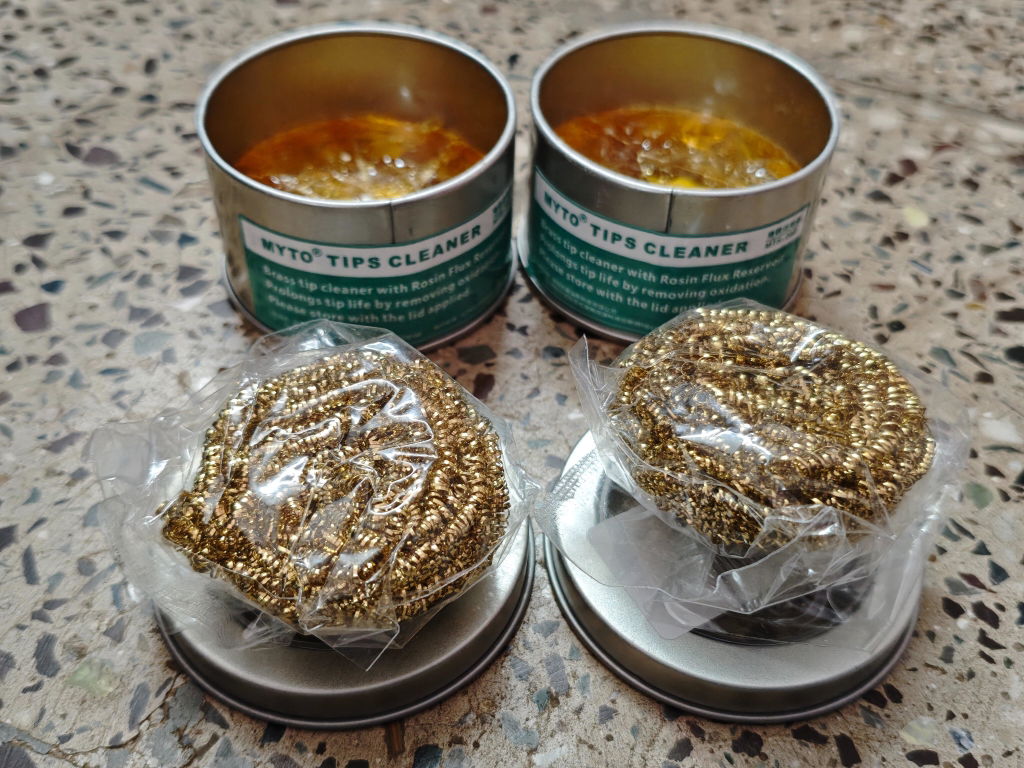
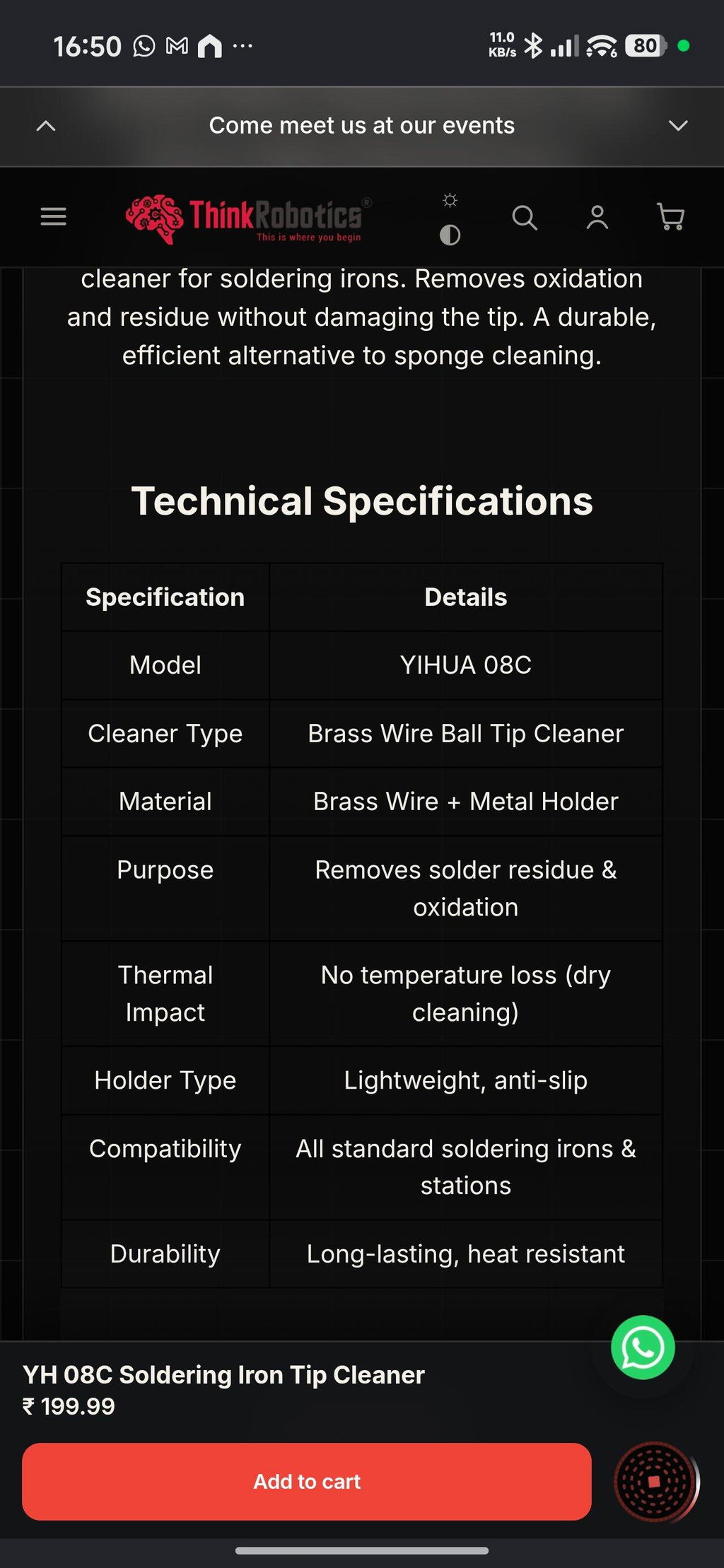
Open tool →Given the fact that this was my first purchase and I made it thinking I was buying genuine Yihua products, this has been a setback. I received a lesser known OEM brand called MYTO and while both the products seem to be similar from appearance, my real contention is the quality and quantity of the brass wool. On top of that not informing the customer about the unavailability of the Yihua product and instead sending a product from a different brand is also antagonising. Henceforth, I might just have to think twice before ordering from ThinkRobotics.
TOF MINIF Range Sensor - UART TOF Time-of-Flight Laser Range Sensor
We are disappointed with our recent order experience. We clearly communicated our requirement for 433 MHz antennas on WhatsApp, but the issue remains unresolved. We have been following up for more than 10 days and are still waiting for a proper refund resolution.
As a regular B2B customer, we expected better support. This experience has affected our trust in ThinkRobotics, and we may have to consider other suppliers for future purchases. We request a fair and prompt refund.
Anodised Aluminium Cup Head Washers (Pack of 10)