Electrical Energy Calculator
Calculate electricity use from power and duration, or constant DC voltage and current. Compare energy use over different operating times in watt-hours, kilowatt-hours and joules.
Open tool
Interactive calculation is unavailable until JavaScript loads. The formulas, worked examples and references below remain available.
Find the largest heat-sink-to-ambient thermal resistance that keeps a junction below its limit, from power, ambient temperature and junction-to-case and interface resistance.
Enter the power the device dissipates, its ambient temperature and the junction limit or a lower design target.
Enter θ_JC from the device's data sheet and θ_CS for the grease, pad or insulating washer.
Read the maximum θ_SA. Choose a heat sink rated at or below that value at the expected airflow and power.
If the device's θ_JA on your board is known, include the board path to see how it changes the heat-sink requirement.
Copy the labelled result or reset the inputs to their starting values.
The allowed temperature rise, junction limit minus ambient, divided by the power is the whole thermal budget in °C/W. Heat leaves the junction through θ_JC into the case, through the interface θ_CS into the heat sink, and through θ_SA into the air. In series, these resistances add, so the heat sink may use what remains after θ_JC and θ_CS.
If θ_JC and θ_CS already use the whole budget, no heat sink can hold the limit. Reduce the power, choose a part with lower θ_JC, improve the interface or accept a lower ambient. An insulating washer can cost more than a degree per watt on its own.
Some heat also leaves through the circuit board. When the device's θ_JA on your board is known, TI's SPRA953 combines the two paths in parallel. The heat sink can then be worse, and at low power the board alone may be enough.
Limitations: catalogue θ_SA depends on airflow, orientation and the power itself, so leave margin. The model assumes one device, a uniform heat-sink temperature and steady power. It does not design fins or fans, and pulsed loads need transient thermal data. Estimate interface resistance as thickness ÷ (conductivity × area), but measured values are better.
Allowed rise and budget: θ_budget = (T_J,max − T_A) / P.
Heat sink in series: θ_SA,max = θ_budget − θ_JC − θ_CS.
With the board path: X = θ_JA × θ_budget / (θ_JA − θ_budget); θ_SA,max = X − θ_JC − θ_CS; no heat sink is needed when θ_budget ≥ θ_JA.
Interface estimate: θ_CS ≈ t / (k × A).
15 W, 40 °C ambient, 150 °C junction limit, θ_JC 0.5 and θ_CS 0.3 °C/W: θ_SA ≤ 6.533 °C/W; sink 138 °C and case 142.5 °C at the limit. The 110 °C rise gives a total budget of 7.333 °C/W. The case and interface use 0.8 °C/W.
100 W, 25 °C ambient, 145 °C limit, θ_JC 0.8 and θ_CS 0.1 °C/W: θ_SA ≤ 0.3 °C/W; sink 55 °C and case 65 °C. This is the high-power TO-3 example in TI SBOA021, solved for the heat sink.
50 W, 40 °C ambient, 125 °C limit, θ_JC 1.5 and θ_CS 0.5 °C/W: No heat sink can hold the limit; short by 0.3 °C/W. The budget is 1.7 °C/W, less than the 2 °C/W used by the junction-to-case and interface path.
5 W, 25 °C ambient, 125 °C limit, θ_JC 2, θ_CS 0.5 and board θ_JA 62 °C/W: θ_SA ≤ 27.02 °C/W; series-only requirement 17.5 °C/W. The board carries part of the heat, so the parallel-path model allows a higher sink resistance.
Using a data-sheet θ_JA as the heat-sink path: The data-sheet θ_JA already includes its test board and no heat sink. Use θ_JC for the junction-to-case part of the heat-sink path, as SPRA953 explains.
Texas Instruments SPRA953: Semiconductor and IC Package Thermal Metrics
Texas Instruments SBOA021: Heat Sinking — TO-3 Thermal Model
ROHM 65AN117E: How to Use the Thermal Resistance and Thermal Characteristics Parameters
Available now
Calculate electricity use from power and duration, or constant DC voltage and current. Compare energy use over different operating times in watt-hours, kilowatt-hours and joules.
Open tool →Available now
Add up to 20 resistors in series using Ω, kΩ or MΩ for circuit analysis and electricity calculations, with a diagram and running total.
Open tool →Available now
Convert absolute temperatures between Celsius, Fahrenheit and kelvin.
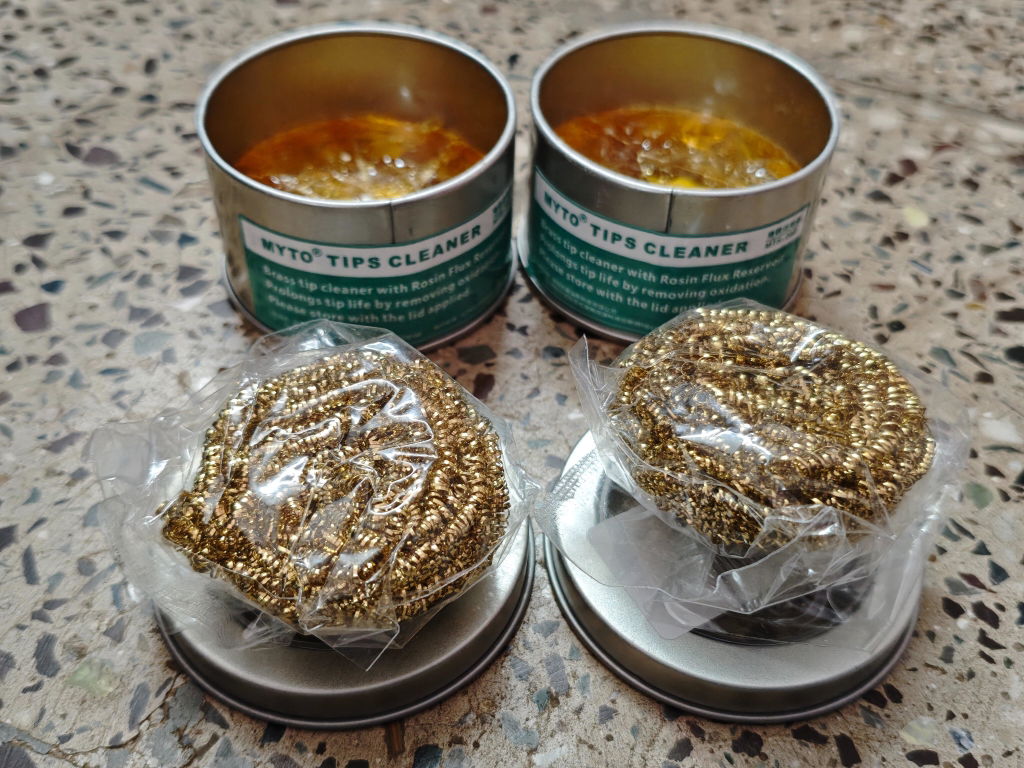
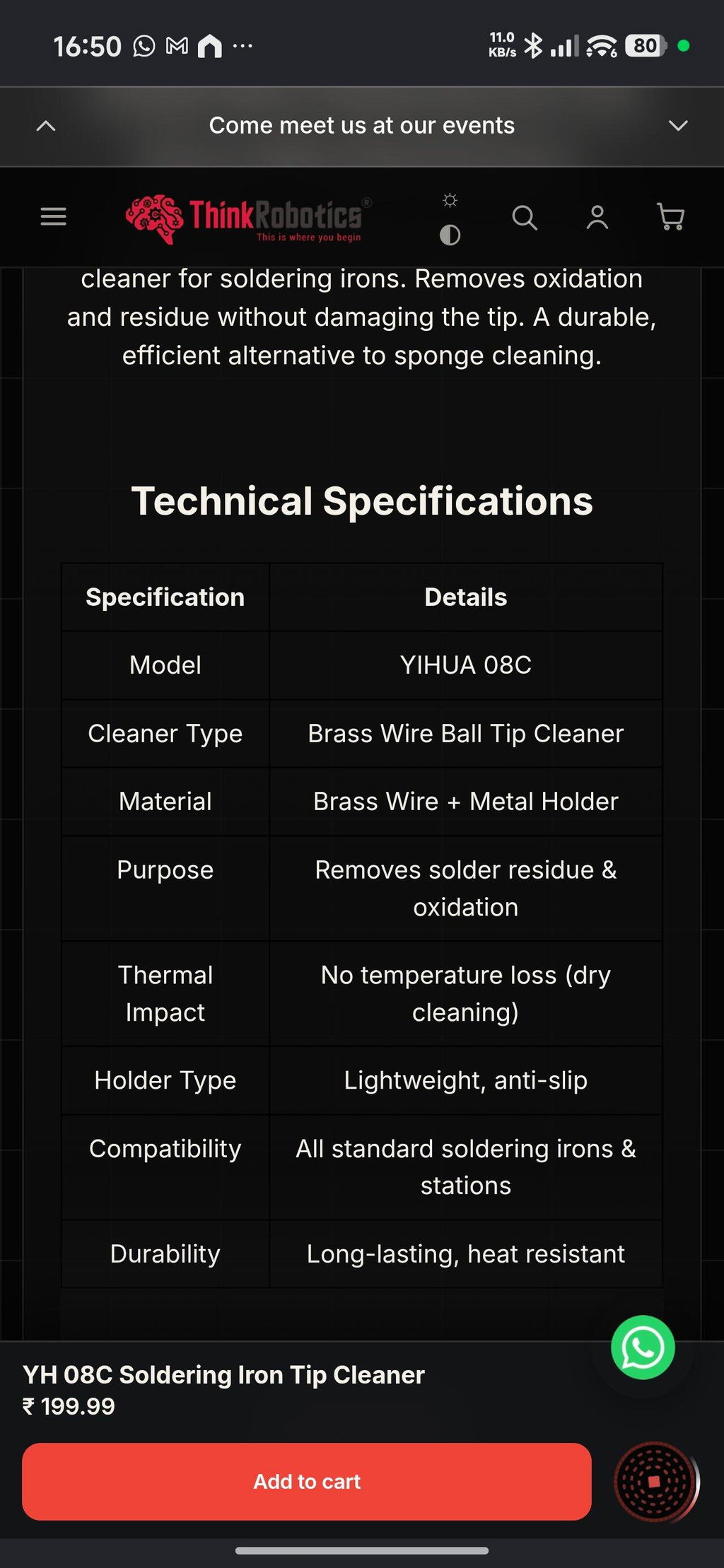
Open tool →Given the fact that this was my first purchase and I made it thinking I was buying genuine Yihua products, this has been a setback. I received a lesser known OEM brand called MYTO and while both the products seem to be similar from appearance, my real contention is the quality and quantity of the brass wool. On top of that not informing the customer about the unavailability of the Yihua product and instead sending a product from a different brand is also antagonising. Henceforth, I might just have to think twice before ordering from ThinkRobotics.
TOF MINIF Range Sensor - UART TOF Time-of-Flight Laser Range Sensor
We are disappointed with our recent order experience. We clearly communicated our requirement for 433 MHz antennas on WhatsApp, but the issue remains unresolved. We have been following up for more than 10 days and are still waiting for a proper refund resolution.
As a regular B2B customer, we expected better support. This experience has affected our trust in ThinkRobotics, and we may have to consider other suppliers for future purchases. We request a fair and prompt refund.
Anodised Aluminium Cup Head Washers (Pack of 10)