Electrical Energy Calculator
Calculate electricity use from power and duration, or constant DC voltage and current. Compare energy use over different operating times in watt-hours, kilowatt-hours and joules.
Open tool
Interactive calculation is unavailable until JavaScript loads. The formulas and worked examples below remain available.
Find voltage, current, resistance and power from two known values for a passive DC resistor, with optional checks for extra readings.
Choose the two quantities you know: voltage, current, resistance or power.
Enter both values. Select their units. Use positive resistance and nonnegative magnitudes for the other quantities.
Choose the main result. Read all four quantities. Each is marked Provided or Calculated.
To check another reading, enable Check extra readings. Enter the reading. A disagreement above 0.1% requires correction. The selected pair still determines the solution.
Read the equation route below the wheel for the selected formulas. Open Show the steps to see the substitutions. The wheel has no interactive controls.
Copy result includes inputs, units and assumptions. Reset clears all readings and restores the starting pair and result selection.
Ohm's law relates voltage, current and resistance for an ohmic component at a fixed operating condition. Changing temperature or using a nonohmic device can change that relationship. This tool uses a single resistance value.
Electrical power combines voltage and current. Substituting the resistance relationship gives other power formulas. The equation route below the wheel shows the formulas used for the selected pair. Two suitable quantities determine the remaining quantities under this model.
This tool uses magnitudes. It does not model reference directions, generated power, phase differences, reactive components or AC impedance. A positive resistance represents a passive resistor. An ideal short or open circuit needs different limiting rules.
Zero can be a valid operating point when resistance is known. Zero applied voltage means zero current and zero power. If voltage and current are both zero while resistance is unknown, many resistances are possible and the answer is not unique.
Optional readings test agreement with the two selected values. The fixed 0.1% threshold checks numerical consistency. It does not assess specification tolerance or measurement uncertainty. The calculator does not select a safe component power rating.
Voltage: V = I×R · V = P/I · V = √(P×R)
Current: I = V/R · I = P/V · I = √(P/R)
Resistance: R = V/I · R = V²/P · R = P/I²
Power: P = V×I · P = I²×R · P = V²/R. Use only expressions with defined denominators. V is voltage in volts, I current in amperes, R resistance in ohms, and P power in watts.
12 V and 2 A: 6 Ω and 24 W. Divide voltage by current for resistance. Multiply them for power.
5 V and 1 kΩ: 5 mA and 25 mW. Convert 1 kΩ to 1,000 Ω before calculating.
8 Ω and 2 W: 4 V and 0.5 A. The positive square roots give the supported magnitude solution.
0 V and 100 Ω: 0 A and 0 W. A known positive resistance permits a unique zero operating point.
0 V and 0 A: No unique resistance. Select a pair that includes resistance to describe this zero-power case.
12 V, 2 A, extra check 10 Ω: Inconsistent reading. The selected pair predicts 6 Ω. The 10 Ω reading does not agree within 0.1%.
OpenStax University Physics Volume 2, 9.4: Ohm's Law
OpenStax University Physics Volume 2, 9.5: Electrical Energy and Power
Available now
Calculate electricity use from power and duration, or constant DC voltage and current. Compare energy use over different operating times in watt-hours, kilowatt-hours and joules.
Open tool →Available now
Add up to 20 resistors in series using Ω, kΩ or MΩ for circuit analysis and electricity calculations, with a diagram and running total.
Open tool →Available now
Convert absolute temperatures between Celsius, Fahrenheit and kelvin.
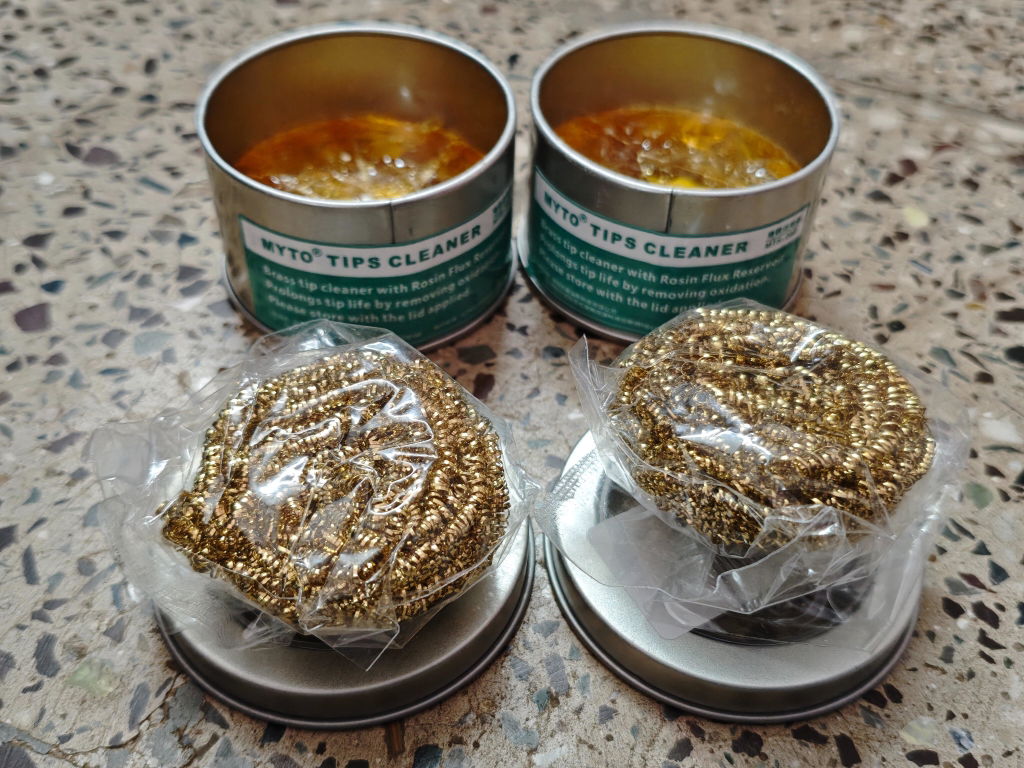
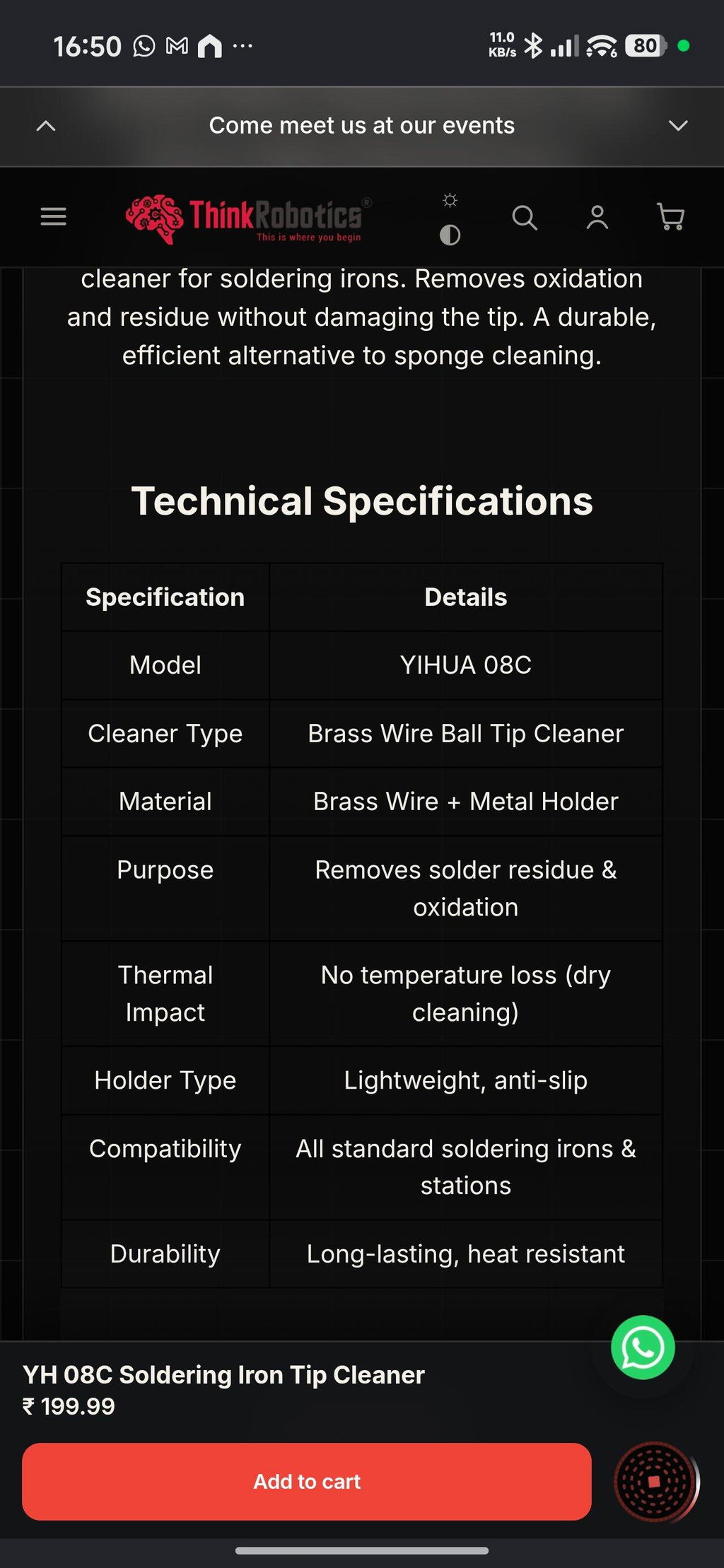
Open tool →Given the fact that this was my first purchase and I made it thinking I was buying genuine Yihua products, this has been a setback. I received a lesser known OEM brand called MYTO and while both the products seem to be similar from appearance, my real contention is the quality and quantity of the brass wool. On top of that not informing the customer about the unavailability of the Yihua product and instead sending a product from a different brand is also antagonising. Henceforth, I might just have to think twice before ordering from ThinkRobotics.
TOF MINIF Range Sensor - UART TOF Time-of-Flight Laser Range Sensor
We are disappointed with our recent order experience. We clearly communicated our requirement for 433 MHz antennas on WhatsApp, but the issue remains unresolved. We have been following up for more than 10 days and are still waiting for a proper refund resolution.
As a regular B2B customer, we expected better support. This experience has affected our trust in ThinkRobotics, and we may have to consider other suppliers for future purchases. We request a fair and prompt refund.
Anodised Aluminium Cup Head Washers (Pack of 10)