Electrical Energy Calculator
Calculate electricity use from power and duration, or constant DC voltage and current. Compare energy use over different operating times in watt-hours, kilowatt-hours and joules.
Open tool
Interactive calculation is unavailable until JavaScript loads. The formulas, worked examples and references below remain available.
Calculate ideal inverting or non-inverting op-amp gain from two resistors, or the feedback resistor for a target gain, with output clipping.
Choose Inverting or Non-inverting to match your circuit.
Choose Gain from resistors, or Feedback resistor for a target gain.
Enter the resistor values with their units, or the target gain and the other resistor.
Optionally enter an input voltage, or drag the input-voltage slider, and the op amp's output high and low limits to see the output and any clipping.
Read the gain, its decibel value and the transfer line. Copy result copies the labeled values. Reset restores the starting example.
With negative feedback, an ideal op amp adjusts its output until its two inputs are at the same voltage, and no current flows into the inputs. The resistor network then fixes the ratio of output to input.
In the inverting amplifier the non-inverting input is grounded, so the inverting input sits at 0 V. The input current V_in ÷ R_in must all flow through R_f, giving V_out = −(R_f ÷ R_in) × V_in. The source sees R_in as the input resistance.
In the non-inverting amplifier the signal drives the non-inverting input. R_f and R_g divide the output back to the inverting input, so V_out = (1 + R_f ÷ R_g) × V_in. The gain is at least 1, the output is in phase, and the source sees the op amp's very high input resistance.
Real op amps cannot drive their output beyond limits set by the supply and the load. Past those limits the output clips: the transfer line goes flat, and only inputs inside the linear input range are amplified faithfully.
Limitations: the tool assumes an ideal op amp, with no bandwidth, slew rate, offset, bias current or noise. The closed-loop bandwidth is roughly the gain-bandwidth product divided by 1 + R_f ÷ R_in or 1 + R_f ÷ R_g. The output limits are the values you enter, a source resistance adds to R_in in the inverting stage, and resistor tolerances shift the gain. Summing, difference, integrator and differentiator circuits are separate tools, and the tool suggests no standard resistor values.
Inverting gain: G = −R_f ÷ R_in. Resistances in Ω, G in V/V.
Non-inverting gain: G = 1 + R_f ÷ R_g.
Decibels: G_dB = 20 × log10(|G|).
Feedback for a target: Inverting R_f = |G| × R_in; non-inverting R_f = (G − 1) × R_g.
Output with limits: V_out = G × V_in, limited to the range V_OL to V_OH.
Inverting, R_f 100 kΩ, R_in 10 kΩ, V_in 0.25 V, output limits ±12 V: G = −10 V/V (20 dB), V_out = −2.5 V. The output is ten times larger and inverted; the source sees 10 kΩ. Inputs between −1.2 V and 1.2 V stay linear.
Non-inverting, R_f 100 kΩ, R_g 10 kΩ, V_in 1.5 V, limits ±12 V: G = 11 V/V; output clips at 12 V (ideal 16.5 V). Inputs between −1.091 V and 1.091 V stay linear.
Non-inverting, target gain 0.5: No result. A non-inverting stage cannot attenuate. Use an inverting stage with |G| = 0.5 (R_f = R_in ÷ 2) or a divider before a follower.
Texas Instruments: Op Amps for Everyone, chapter 3 (SLOD006)
Texas Instruments: Handbook of Operational Amplifier Applications (SBOA092)
Available now
Calculate electricity use from power and duration, or constant DC voltage and current. Compare energy use over different operating times in watt-hours, kilowatt-hours and joules.
Open tool →Available now
Add up to 20 resistors in series using Ω, kΩ or MΩ for circuit analysis and electricity calculations, with a diagram and running total.
Open tool →Available now
Convert absolute temperatures between Celsius, Fahrenheit and kelvin.
Open tool →Nice audio board working as expected.
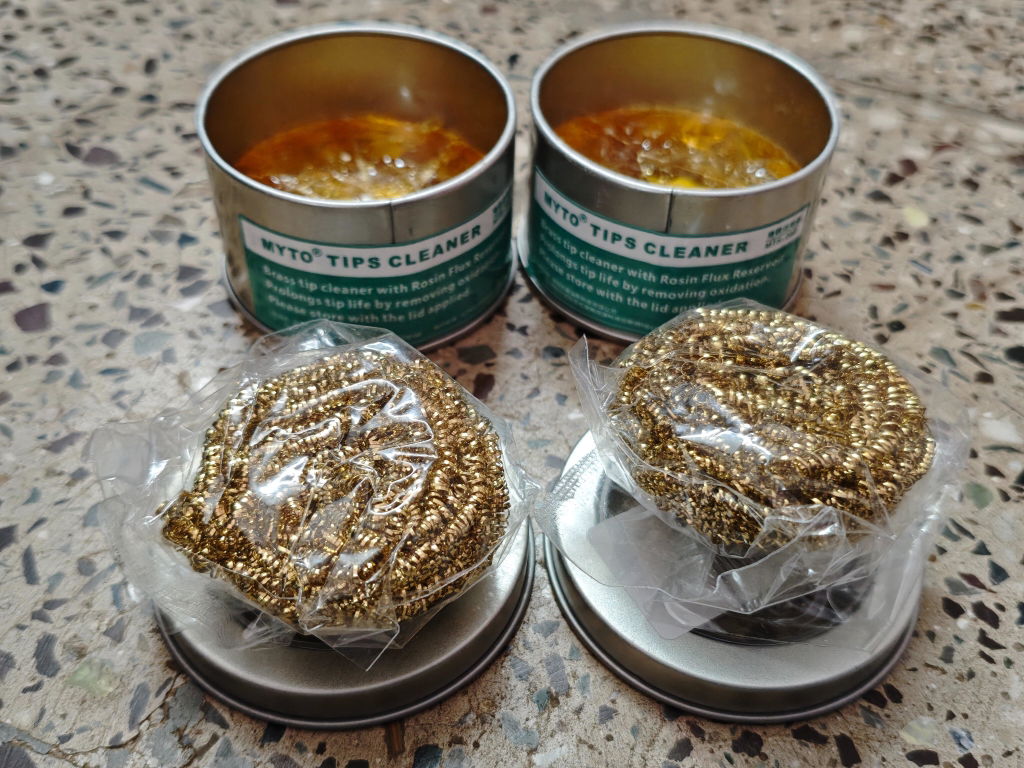
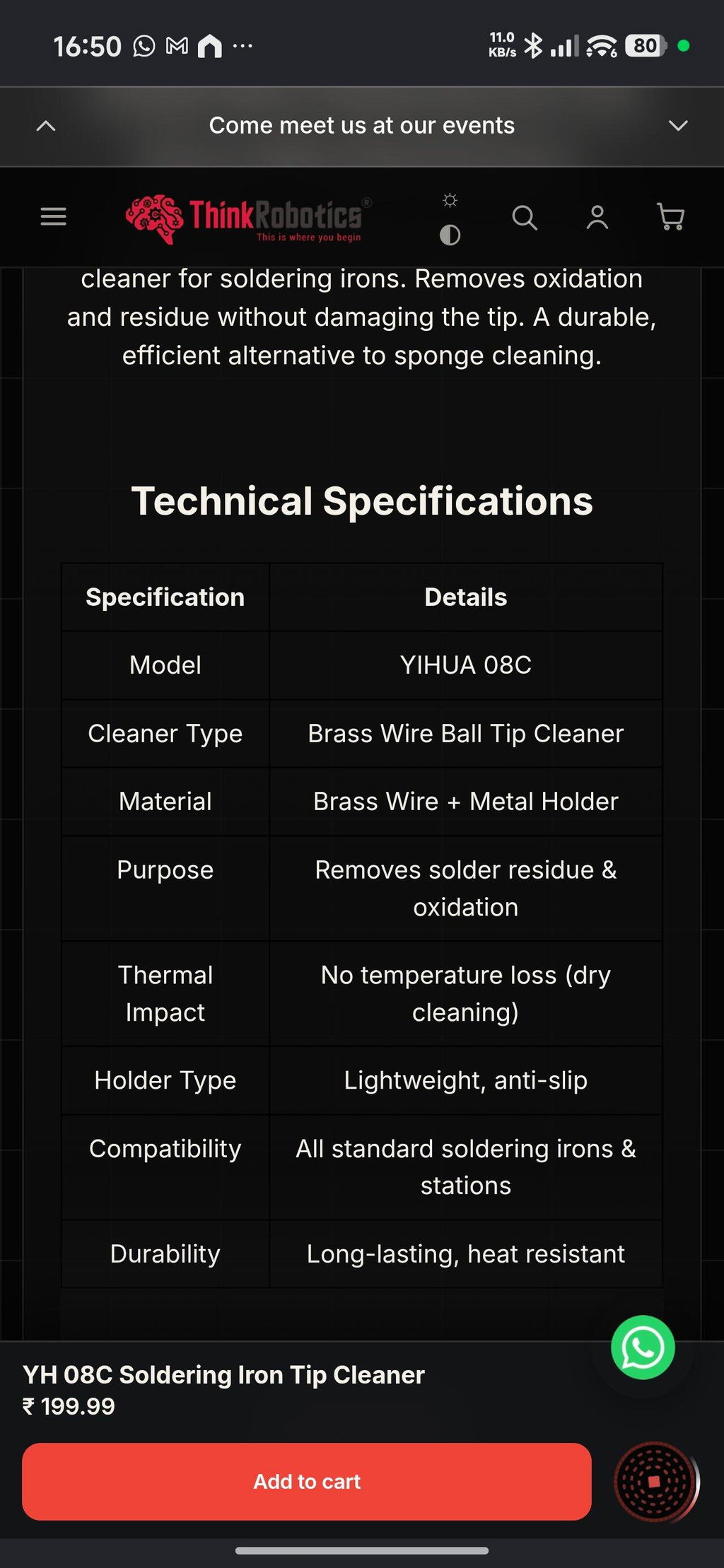
Given the fact that this was my first purchase and I made it thinking I was buying genuine Yihua products, this has been a setback. I received a lesser known OEM brand called MYTO and while both the products seem to be similar from appearance, my real contention is the quality and quantity of the brass wool. On top of that not informing the customer about the unavailability of the Yihua product and instead sending a product from a different brand is also antagonising. Henceforth, I might just have to think twice before ordering from ThinkRobotics.
TOF MINIF Range Sensor - UART TOF Time-of-Flight Laser Range Sensor
We are disappointed with our recent order experience. We clearly communicated our requirement for 433 MHz antennas on WhatsApp, but the issue remains unresolved. We have been following up for more than 10 days and are still waiting for a proper refund resolution.
As a regular B2B customer, we expected better support. This experience has affected our trust in ThinkRobotics, and we may have to consider other suppliers for future purchases. We request a fair and prompt refund.
Anodised Aluminium Cup Head Washers (Pack of 10)