Electrical Energy Calculator
Calculate electricity use from power and duration, or constant DC voltage and current. Compare energy use over different operating times in watt-hours, kilowatt-hours and joules.
Open tool
Choose the gauge system printed on your wire specification. The same gauge number can mean a different size in AWG and SWG.
Enable JavaScript to calculate. Formulas and worked examples remain available below.
Convert AWG and SWG wire sizes to diameter and area, or compare a metric size with nearby gauges.
Choose AWG, SWG, diameter or area as the source.
Select a gauge or enter the metric value.
Choose AWG or SWG for the comparison.
Read the diameter, area and nearby listed sizes.
When the diagram is visible, use Highlight comparison to inspect a size. Copy result includes the source and table basis.
Select Reset to clear the input and restore this block's starting settings.
Wire gauges identify discrete sizes. Larger gauge numbers usually describe thinner wire within one system.
AWG follows a geometric diameter progression. SWG uses a separate table of nominal diameters. Equal numbers in the two systems are not equivalent sizes.
A circular wire's area depends on the square of its diameter. Doubling the diameter multiplies the area by four.
This tool uses the geometric AWG definition and tabulated SWG dimensions. Values rounded in another reference can differ slightly.
Metric area is the conductor's cross-sectional area. Equivalent circular diameter does not describe a stranded cable's outside diameter or its insulation.
Nearest gauge means nearest area in the selected table. It does not establish current capacity, suitability, availability or compliance.
Circular area: A = πd²/4, with diameter d in mm and area A in mm².
Equivalent circular diameter: d = √(4A/π).
AWG diameter: d = 0.127 × 92^((36-n)/39) mm. Indices -3, -2, -1 and 0 represent 4/0, 3/0, 2/0 and 0.
SWG diameter: d in mm = d in mils × 0.0254.
Area difference: 100 × (listed area - source area) / source area, as a signed percentage.
AWG 20: About 0.811821 mm diameter and 0.517619 mm² area. The geometric AWG definition supplies the diameter.
SWG 20: 0.9144 mm diameter and about 0.656693 mm² area. The table lists 36 mils. This differs from AWG 20.
Diameter 1 mm: About 0.785398 mm². The circular area is π/4 for this diameter.
Area 1 mm², compare AWG: About 1.12838 mm diameter. Nearest AWG 17 has about 1.03784 mm² area.. Area distance determines the gauge comparison.
AWG 36: 0.127 mm diameter and about 0.0126677 mm² area. This is one defining AWG anchor.
Available now
Calculate electricity use from power and duration, or constant DC voltage and current. Compare energy use over different operating times in watt-hours, kilowatt-hours and joules.
Open tool →Available now
Add up to 20 resistors in series using Ω, kΩ or MΩ for circuit analysis and electricity calculations, with a diagram and running total.
Open tool →Available now
Convert absolute temperatures between Celsius, Fahrenheit and kelvin.
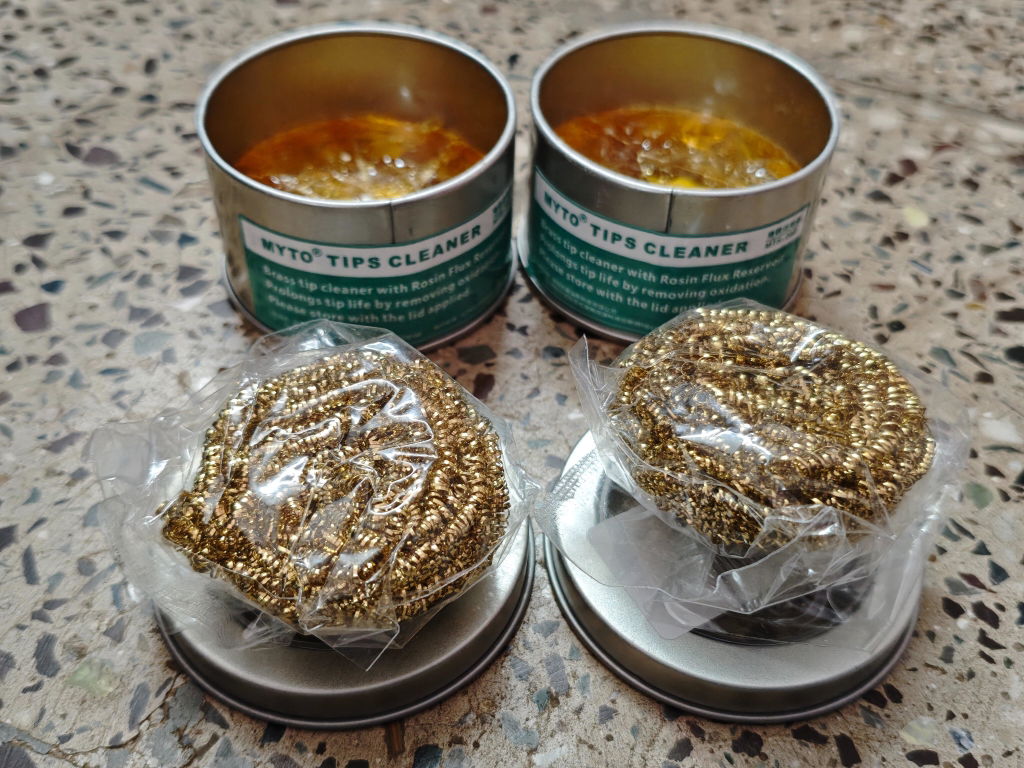
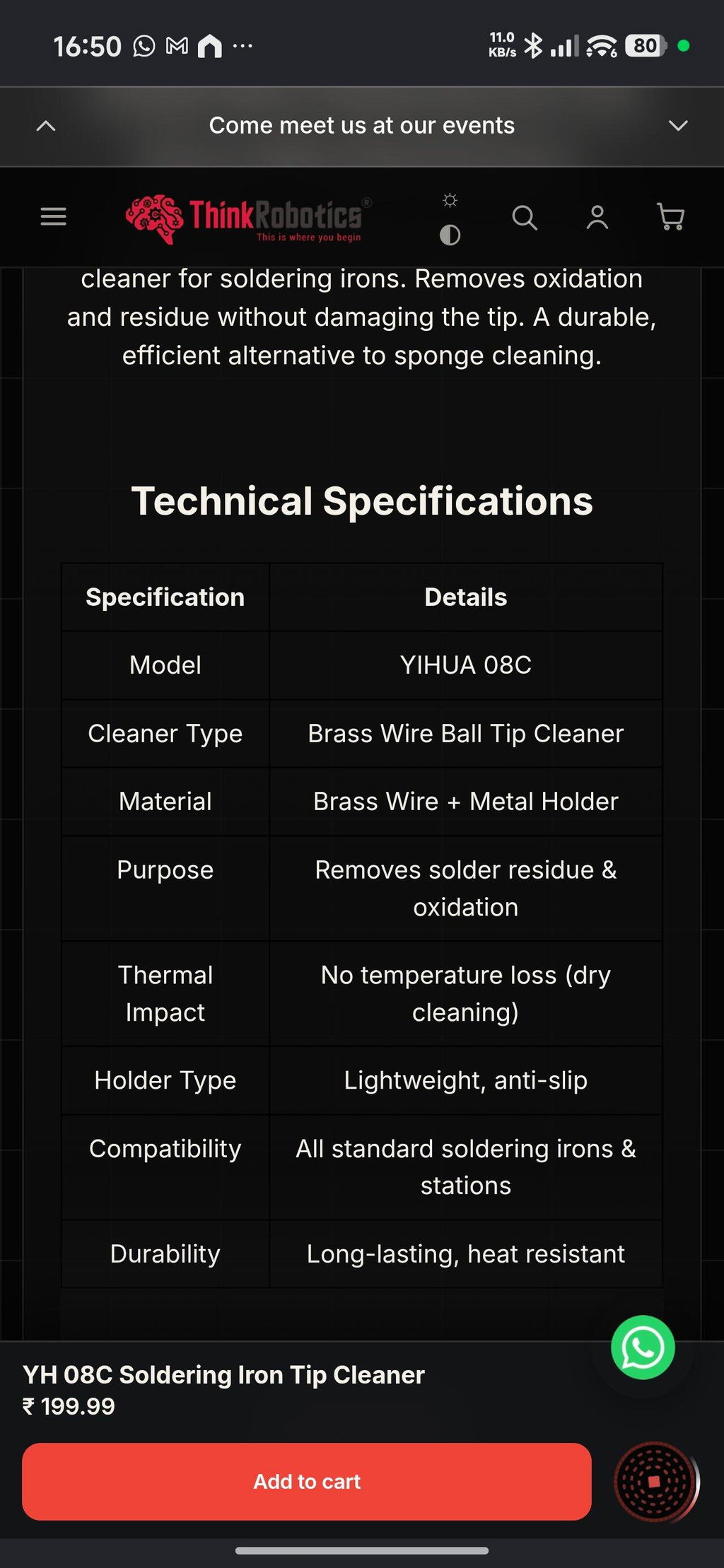
Open tool →Given the fact that this was my first purchase and I made it thinking I was buying genuine Yihua products, this has been a setback. I received a lesser known OEM brand called MYTO and while both the products seem to be similar from appearance, my real contention is the quality and quantity of the brass wool. On top of that not informing the customer about the unavailability of the Yihua product and instead sending a product from a different brand is also antagonising. Henceforth, I might just have to think twice before ordering from ThinkRobotics.
TOF MINIF Range Sensor - UART TOF Time-of-Flight Laser Range Sensor
We are disappointed with our recent order experience. We clearly communicated our requirement for 433 MHz antennas on WhatsApp, but the issue remains unresolved. We have been following up for more than 10 days and are still waiting for a proper refund resolution.
As a regular B2B customer, we expected better support. This experience has affected our trust in ThinkRobotics, and we may have to consider other suppliers for future purchases. We request a fair and prompt refund.
Anodised Aluminium Cup Head Washers (Pack of 10)