Electrical Energy Calculator
Calculate electricity use from power and duration, or constant DC voltage and current. Compare energy use over different operating times in watt-hours, kilowatt-hours and joules.
Open tool
Interactive calculation is unavailable until JavaScript loads. The formulas, worked examples and references below remain available.
Find the natural frequency, Q and gain of a second-order Sallen-Key or multiple-feedback low-pass or high-pass filter, or exact component values for a target f0 and Q.
Choose Sallen–Key or multiple feedback (MFB), and low-pass or high-pass.
Choose Response from components to analyse a circuit, or Components for f0 and Q to design one.
To analyse, enter each resistor and capacitor in the position its label describes, and the gain K for Sallen–Key.
To design, enter f0, Q and the capacitor you want to use; for Sallen–Key choose unity gain or equal components, for MFB enter the passband gain.
Read f0, Q, the gain, the −3 dB frequency and any peaking, and the response chart. Copy result copies labeled values; Reset restores the starting fields.
A second-order filter is set by two numbers: the natural frequency f0, where its phase is a quarter turn from the passband, and the quality factor Q, which sets the shape near f0. Q = 0.7071 gives the flattest passband (Butterworth), Q = 0.5774 the most even delay (Bessel), and Q above 0.7071 gives a peak before the roll-off. Beyond f0 the gain falls 40 dB per decade.
A Sallen–Key stage puts two RC sections in front of a non-inverting amplifier of gain K, with one capacitor (low-pass) or resistor (high-pass) fed back from the output. At unity gain the ratio of the two capacitors (or resistors) sets Q. With equal components Q depends only on K: Q = 1 ÷ (3 − K), so a Q of 1 needs K = 2 and K close to 3 makes Q very sensitive to resistor tolerance.
A multiple-feedback stage uses an inverting op amp with two feedback paths. It inverts the signal, sets its passband gain with a resistor ratio (low-pass) or a capacitor ratio (high-pass), and is less sensitive to component spread, which suits high gain or high Q.
The design paths here give exact values for one common choice of equal parts. Real parts come in standard values, so pick the nearest ones and analyse the result: f0 and Q move with every part you change.
Limitations: the formulas assume an ideal op amp. Its gain-bandwidth product limits high-pass filters (they become band-limited) and high f0 or Q; output impedance lets Sallen–Key low-pass stages leak at high frequencies; op-amp noise and slew rate are not modelled. Higher orders are built by cascading stages with filter-table Q values, which this tool does not provide. There is no standard-value suggestion.
Sallen–Key low-pass: f0 = 1 ÷ (2π sqrt(R1 R2 C1 C2)); Q = sqrt(R1 R2 C1 C2) ÷ (R1 C1 + R2 C1 + R1 C2 (1 − K)).
Sallen–Key high-pass: f0 = 1 ÷ (2π sqrt(R1 R2 C1 C2)); Q = sqrt(R1 R2 C1 C2) ÷ (R2 C2 + R2 C1 + R1 C2 (1 − K)).
MFB low-pass: f0 = 1 ÷ (2π sqrt(R2 R3 C1 C2)); Q = sqrt(R2 R3 C1 C2) ÷ (R3 C1 + R2 C1 + R2 R3 C1 ÷ R1); gain −R2 ÷ R1.
MFB high-pass: f0 = 1 ÷ (2π sqrt(R1 R2 C2 C3)); Q = sqrt(R2 C2 C3 ÷ R1) ÷ (C1 + C2 + C3); gain −C1 ÷ C3.
Equal components: R = 1 ÷ (2π f0 C); K = 3 − 1 ÷ Q.
Unity-gain Sallen–Key: low-pass C2 = 4Q² C1, R = 1 ÷ (4π Q f0 C1); high-pass R1 = 4Q² R2, R2 = 1 ÷ (4π Q f0 C).
Sallen–Key low-pass, unity gain, f0 1 kHz, Q 0.7071, C1 10 nF: R1 = R2 = 11.25 kΩ, C2 = 20 nF; −3 dB at 1 kHz. Butterworth: C2 is 4Q² = 2 times C1.
Sallen–Key low-pass, equal components, f0 1 kHz, Q 0.7071, C 10 nF: R = 15.92 kΩ, K = 1.586 (R4 ÷ R3 = 0.5858), passband 4.00 dB. Equal parts fix Q through K alone.
MFB low-pass, gain 1, f0 1 kHz, Q 0.7071, C1 10 nF: R1 = R2 = R3 = 7.503 kΩ, C2 = 45 nF; gain −1 (180°). C2 = Q²(2 + H)² × C1 = 4.5 × C1.
MFB high-pass, gain 1, f0 1 kHz, Q 0.7071, C 1 nF: C1 = C2 = C3 = 1 nF, R1 = 75.03 kΩ, R2 = 337.6 kΩ. TI's example uses 75 kΩ and 336 kΩ: f0 1.003 kHz, Q 0.7055.
Sallen–Key equal components with K = 2.9: Q = 10. Common mistake: TI's worst case with 1 % resistors is Q = 16; use MFB or unity gain for high Q.
Sallen–Key low-pass analysis, R1 = R2 = 10 kΩ, C1 = 10 nF, C2 = 22 nF, K = 1: f0 = 1.073 kHz, Q = 0.7416. Boundary of 'flat': Q slightly above 0.7071 gives a 0.04 dB peak at 323.5 Hz; −3 dB at 1.123 kHz.
TI: Analysis of the Sallen-Key Architecture (SLOA024B)
TI: Active Low-Pass Filter Design (SLOA049D)
TI: Single-supply 2nd-order MFB high-pass filter circuit (SBOA230)
Available now
Calculate electricity use from power and duration, or constant DC voltage and current. Compare energy use over different operating times in watt-hours, kilowatt-hours and joules.
Open tool →Available now
Add up to 20 resistors in series using Ω, kΩ or MΩ for circuit analysis and electricity calculations, with a diagram and running total.
Open tool →Available now
Convert absolute temperatures between Celsius, Fahrenheit and kelvin.
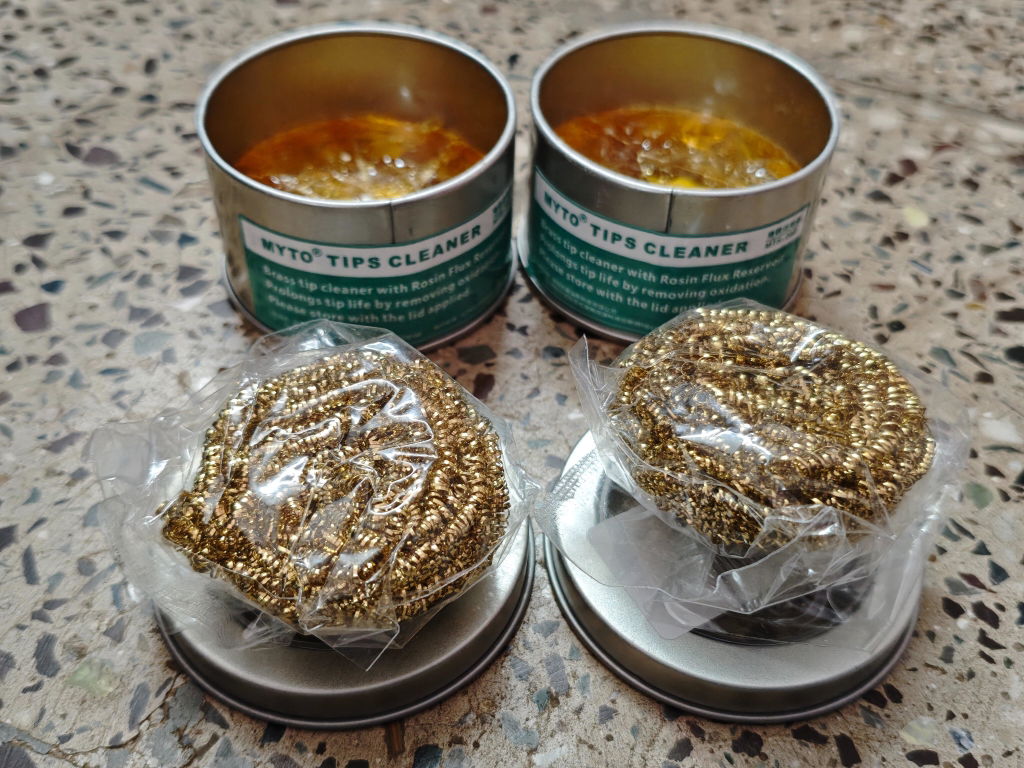
Open tool →Given the fact that this was my first purchase and I made it thinking I was buying genuine Yihua products, this has been a setback. I received a lesser known OEM brand called MYTO and while both the products seem to be similar from appearance, my real contention is the quality and quantity of the brass wool. On top of that not informing the customer about the unavailability of the Yihua product and instead sending a product from a different brand is also antagonising. Henceforth, I might just have to think twice before ordering from ThinkRobotics.
TOF MINIF Range Sensor - UART TOF Time-of-Flight Laser Range Sensor
We are disappointed with our recent order experience. We clearly communicated our requirement for 433 MHz antennas on WhatsApp, but the issue remains unresolved. We have been following up for more than 10 days and are still waiting for a proper refund resolution.
As a regular B2B customer, we expected better support. This experience has affected our trust in ThinkRobotics, and we may have to consider other suppliers for future purchases. We request a fair and prompt refund.
Anodised Aluminium Cup Head Washers (Pack of 10)