Electrical Energy Calculator
Calculate electricity use from power and duration, or constant DC voltage and current. Compare energy use over different operating times in watt-hours, kilowatt-hours and joules.
Open tool
Enter the current supplied to the whole parallel bank. Lower resistance receives a larger current share.
Interactive calculation is unavailable until JavaScript loads. The formulas, worked examples and references below remain available.
Split a known total current among two to twenty parallel resistors and compare each branch's current and share.
Enter the total current. Choose µA, mA or A.
Enter one resistance for each parallel branch. Add or remove rows to use between two and twenty branches.
Read the branch currents, percentages, equivalent resistance and shared voltage.
Compare shares in the bars. Use the current slider for coarse changes. Its range controls and Fit current change the view without changing typed current.
Copy result includes every branch. Reset clears the current and returns to two empty branches with the configured units and initial slider range.
Parallel branches connect across the same two nodes and share a voltage. For positive resistance, each current follows its conductance, the reciprocal of resistance.
Branch currents add algebraically to the total entering the bank. Equal resistances receive equal shares. A smaller resistance receives a larger share.
The total current is a known input. This tool does not predict a real supply's short-circuit behavior or the current limit of a resistor, wire or connector.
One ideal zero-ohm branch takes all imposed current in this model. Multiple ideal zero-ohm branches have no unique current split, so the tool reports an indeterminate case.
The bars show conductance shares even when total current is zero. Negative total current reverses direction without changing shares. Component tolerance and temperature changes are outside the model.
Branch conductance: Gk = 1/Rk, for Rk > 0
Current allocation: Ik = Itotal × Gk/ΣG
Equivalent resistance: Req = 1/ΣG
Common voltage: V = Itotal × Req
Two branches: I1 = Itotal × R2/(R1+R2); I2 = Itotal × R1/(R1+R2)
Conservation: ΣIk = Itotal; currents in A, resistances in Ω, voltage in V
Total 2 A; branches 100 Ω and 100 Ω: 1 A each; 50% each; Req = 50 Ω; V = 100 V. Equal branches split the imposed current equally. The voltage is a mathematical result, not a component rating.
Total 6 A; branches 1 Ω, 2 Ω, 2 Ω: 3 A, 1.5 A, 1.5 A; Req = 0.5 Ω; V = 3 V. The 1 Ω branch has twice the conductance of either 2 Ω branch.
Total −0.03 A; branches 100 Ω and 200 Ω: −0.02 A and −0.01 A; Req = 66.66666667 Ω; V = −2 V. Reversing the total-current direction preserves the 2:1 allocation.
Total 0.5 A; branches 0 Ω and 100 Ω: 0.5 A and 0 A; Req = 0 Ω; V = 0 V. One ideal short takes all imposed current under the stated model.
Total 1 A; branches 0 Ω, 0 Ω, 100 Ω: No unique branch-current result. Two ideal shorts do not specify how current is shared between them.
OpenStax University Physics 2, §10.2: Resistors in Series and Parallel
Available now
Calculate electricity use from power and duration, or constant DC voltage and current. Compare energy use over different operating times in watt-hours, kilowatt-hours and joules.
Open tool →Available now
Add up to 20 resistors in series using Ω, kΩ or MΩ for circuit analysis and electricity calculations, with a diagram and running total.
Open tool →Available now
Convert absolute temperatures between Celsius, Fahrenheit and kelvin.
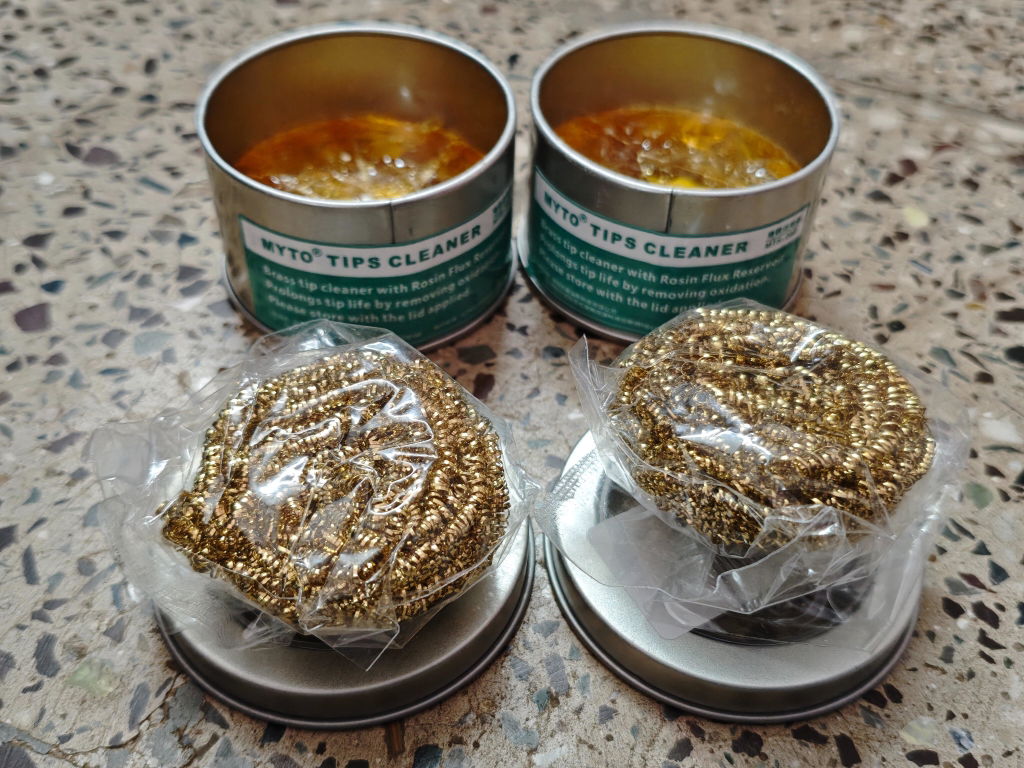
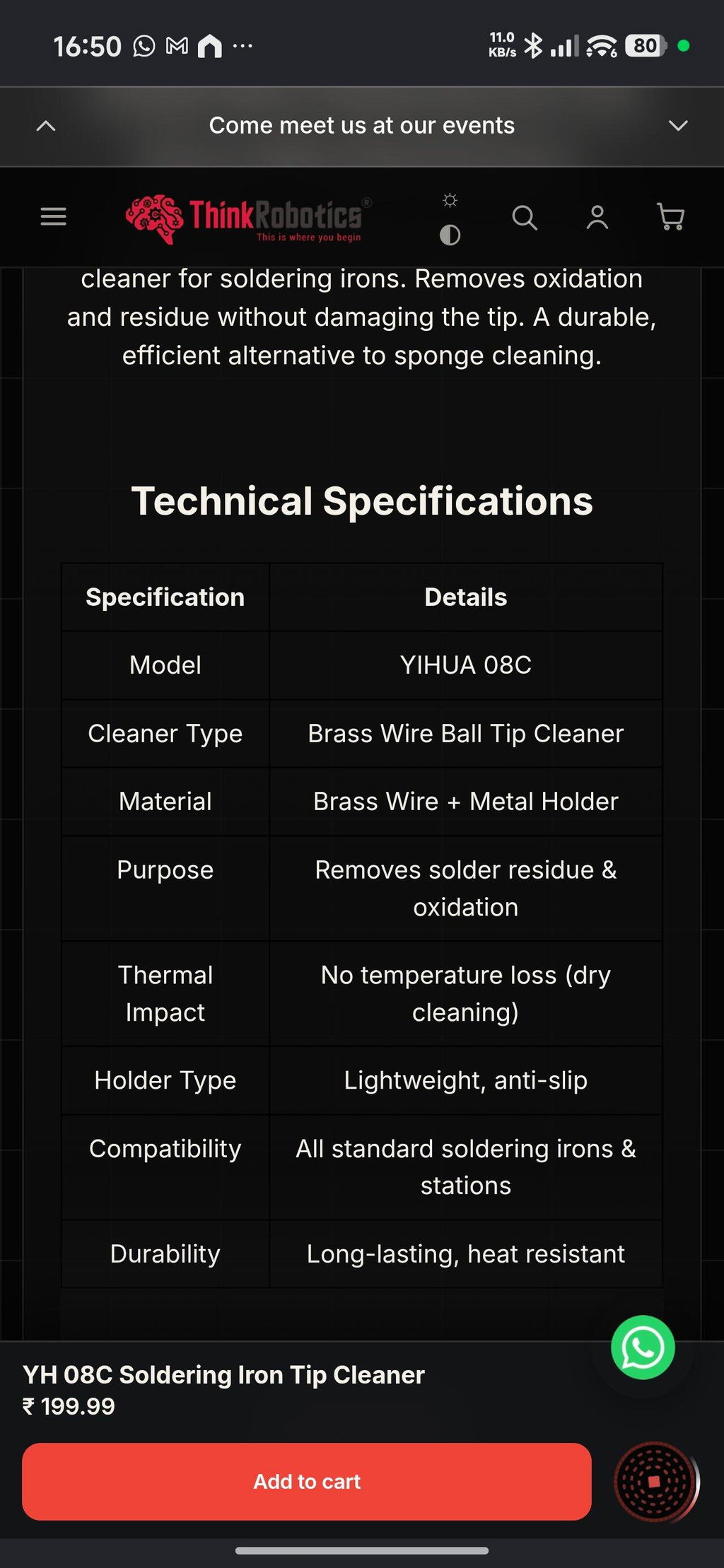
Open tool →Given the fact that this was my first purchase and I made it thinking I was buying genuine Yihua products, this has been a setback. I received a lesser known OEM brand called MYTO and while both the products seem to be similar from appearance, my real contention is the quality and quantity of the brass wool. On top of that not informing the customer about the unavailability of the Yihua product and instead sending a product from a different brand is also antagonising. Henceforth, I might just have to think twice before ordering from ThinkRobotics.
TOF MINIF Range Sensor - UART TOF Time-of-Flight Laser Range Sensor
We are disappointed with our recent order experience. We clearly communicated our requirement for 433 MHz antennas on WhatsApp, but the issue remains unresolved. We have been following up for more than 10 days and are still waiting for a proper refund resolution.
As a regular B2B customer, we expected better support. This experience has affected our trust in ThinkRobotics, and we may have to consider other suppliers for future purchases. We request a fair and prompt refund.
Anodised Aluminium Cup Head Washers (Pack of 10)