Electrical Energy Calculator
Calculate electricity use from power and duration, or constant DC voltage and current. Compare energy use over different operating times in watt-hours, kilowatt-hours and joules.
Open tool
Interactive calculation is unavailable until JavaScript loads. The formulas, worked examples and references below remain available.
Estimate how a multimeter's input resistance loads a voltage reading, and how an ammeter's burden voltage lowers the current it measures.
Choose Voltmeter loading or Ammeter burden.
For a voltage: enter the node's source resistance and the meter's input resistance, and optionally the reading.
For a current: enter the source voltage driving the loop, the current reading and the range's burden, either per current or as a full-scale burden voltage.
Read the loading error and unloaded voltage, or the burden voltage, current error and current without the meter.
Copy result copies labelled values; Reset restores the starting fields.
A voltmeter is connected in parallel with the node it measures, so its input resistance forms a voltage divider with the node's source resistance. The meter reads R_IN / (R_S + R_IN) of the unloaded voltage. A 10 MIc meter is accurate to 0.1 % on nodes of 10 kIc or less, but reads 9 % low on a 1 MIc node.
An ammeter is connected in series, so its shunt, fuse and lead resistance add to the loop. The voltage across them is the burden voltage. The current falls by the fraction V_B / V_S, and the circuit has V_B less to work with.
Meters state the burden either per unit of current (for example 1.8 mV/mA, which is 1.8 Ic) or as a voltage at the range's full-scale current. Dividing a full-scale burden by the full-scale current gives the meter's total series resistance, which is usually more than the shunt alone. Lower current ranges have much higher burden: 100 I�V/I�A is 100 Ic.
Limitations: the tool treats the circuit as a fixed resistance and the source as a fixed voltage, as the cited handbooks do. Regulators, LEDs and microcontrollers do not behave like resistors, so their current can change more or less than this. Burden specifications are typical or maximum values, AC current burden is higher than DC, and meter input capacitance, bias current, accuracy and range changes are not modelled.
Voltmeter reading: V_M = V_S A- R_IN / (R_S + R_IN). R_S is the source resistance, R_IN the meter input resistance.
Loading error: Error = -R_S / (R_S + R_IN).
Input resistance for an error I�: R_IN �%� R_S A- (1/I� - 1): 99 A- R_S for 1 %, 999 A- R_S for 0.1 %.
Meter resistance: R_M = burden per current (1 mV/mA = 1 Ic), or R_M = V_FS / I_FS.
Burden voltage: V_B = I_M A- R_M. I_M is the current reading.
Current error: Error = -V_B / V_S. V_S is the source voltage driving the loop.
Current without the meter: I_0 = I_M / (1 - V_B / V_S).
Voltmeter: source 1 MIc, meter 10 MIc, reading 3 V: Loading error -9.09091 %; unloaded 3.3 V. 10 / (1 + 10) = 0.909091 is read; 3 / 0.909091 = 3.3 V.
Voltmeter: source 100 kIc, meter 10 MIc: -0.990099 %. The Keithley handbook's example: 5 V reads 4.95 V, about 1 % low.
Voltmeter: source 10 kIc, meter 10 MIc: -0.0999001 %. The Fluke manual calls 0.1 % or less negligible for 10 kIc circuits.
Ammeter: 3 V source, reading 100 mA, burden 1.8 mV/mA: Burden 180 mV; reading 6 % low; 106.383 mA without the meter. 1.8 Ic A- 0.1 A = 0.18 V; 0.18 / 3 = 6 %; 0.1 / 0.94 A.
Ammeter: 1.8 V source, reading 100 mA, burden 1.8 mV/mA: Burden 180 mV; reading 10 % low; 111.111 mA without the meter. Common mistake: the same range takes a tenth of a 1.8 V supply, which can also reset a low-voltage circuit.
Ammeter: 5 V source, reading 50 mA, full-scale burden 0.5 V at 100 mA: Burden 250 mV; reading 5 % low; 52.6316 mA without the meter. R_M = 0.5 / 0.1 = 5 Ic, an upper bound from a maximum burden.
Keithley Low Level Measurements Handbook, 7th edition
Keysight 5988-5512EN: Remove resistance, current and frequency measurement errors in DMMs
Keysight Truevolt DMM data sheet 5991-1983EN
Fluke 80 Series V users manual
Fluke: Can you live with the burden?
OpenStax University Physics Volume 2: 10.4 Electrical measuring instruments
Available now
Calculate electricity use from power and duration, or constant DC voltage and current. Compare energy use over different operating times in watt-hours, kilowatt-hours and joules.
Open tool →Available now
Add up to 20 resistors in series using Ω, kΩ or MΩ for circuit analysis and electricity calculations, with a diagram and running total.
Open tool →Available now
Convert absolute temperatures between Celsius, Fahrenheit and kelvin.
Open tool →Nice audio board working as expected.
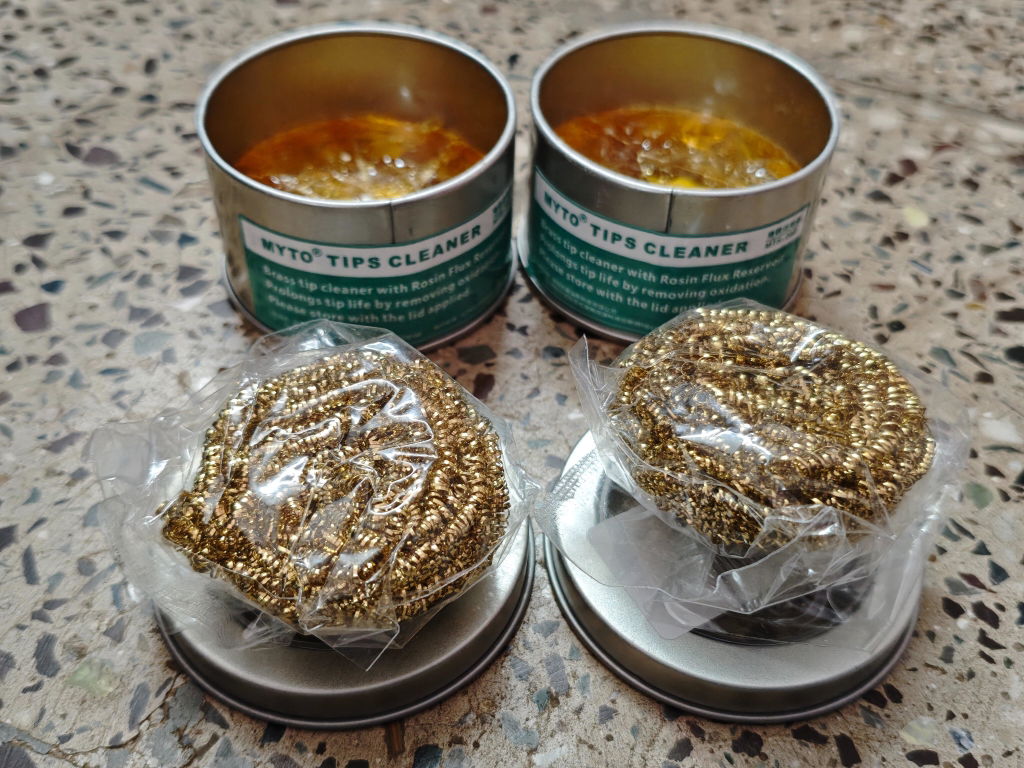
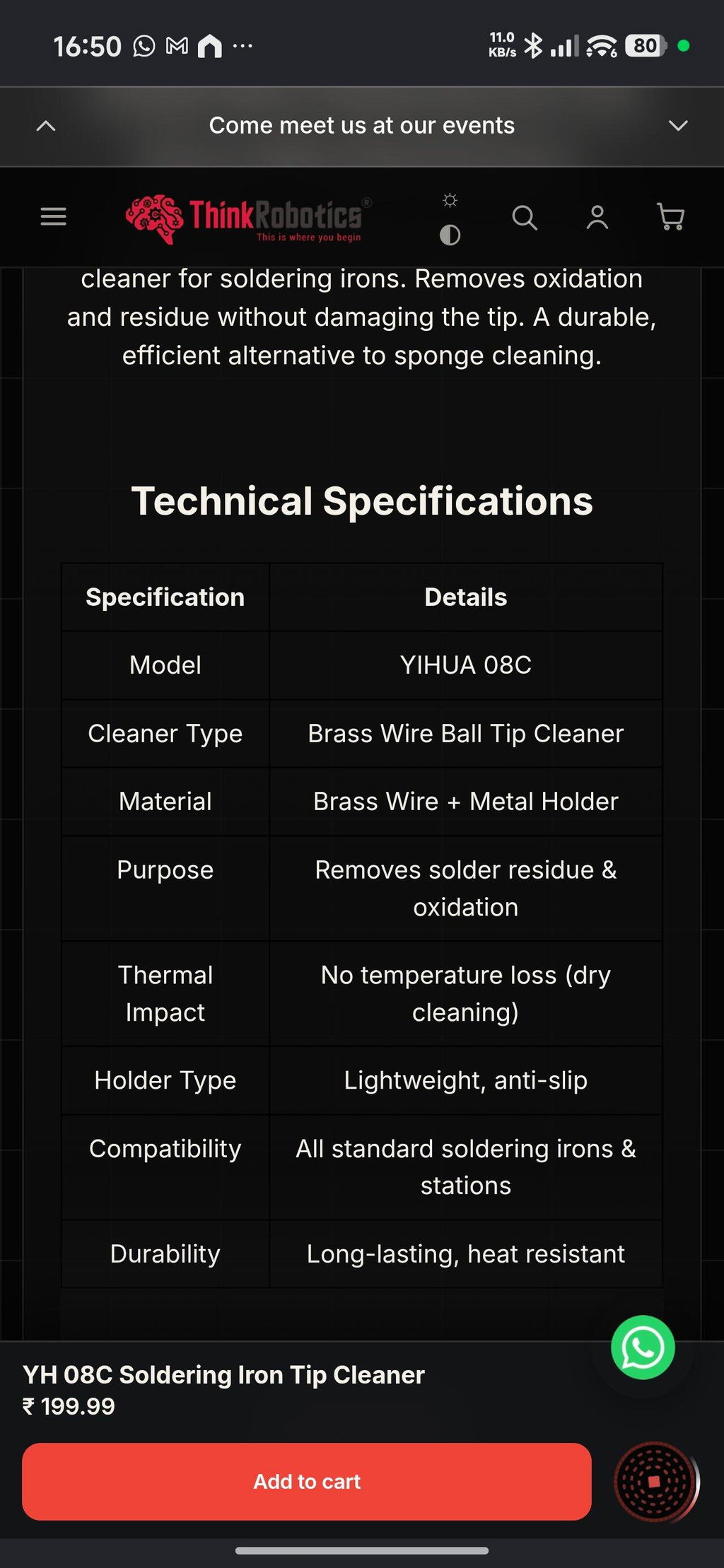
Given the fact that this was my first purchase and I made it thinking I was buying genuine Yihua products, this has been a setback. I received a lesser known OEM brand called MYTO and while both the products seem to be similar from appearance, my real contention is the quality and quantity of the brass wool. On top of that not informing the customer about the unavailability of the Yihua product and instead sending a product from a different brand is also antagonising. Henceforth, I might just have to think twice before ordering from ThinkRobotics.
TOF MINIF Range Sensor - UART TOF Time-of-Flight Laser Range Sensor
We are disappointed with our recent order experience. We clearly communicated our requirement for 433 MHz antennas on WhatsApp, but the issue remains unresolved. We have been following up for more than 10 days and are still waiting for a proper refund resolution.
As a regular B2B customer, we expected better support. This experience has affected our trust in ThinkRobotics, and we may have to consider other suppliers for future purchases. We request a fair and prompt refund.
Anodised Aluminium Cup Head Washers (Pack of 10)