Electrical Energy Calculator
Calculate electricity use from power and duration, or constant DC voltage and current. Compare energy use over different operating times in watt-hours, kilowatt-hours and joules.
Open tool
Interactive calculation is unavailable until JavaScript loads. The formulas, worked examples and references below remain available.
Estimate the minimum PCB trace width for a current and allowed temperature rise with the IPC-2221 first-pass relation for external or internal layers.
Enter the current the trace must carry.
Enter the temperature rise you can accept above ambient.
Enter the copper thickness as ounces, μm or mil, and choose external or internal layer.
Read the minimum width, the cross-section and the width the other layer type would need.
Copy result copies labeled values; Reset restores the starting fields.
Current heats a trace by its resistance, and the trace loses heat to the board and the air. The IPC-2221 charts, first published in IPC-D-275, plot measured temperature rise against current and copper cross-section. Calculators use a curve fit to those charts: I = k × ΔT^0.44 × A^0.725, with the area A in square mils.
Only the constant k depends on the layer: 0.048 for an outer layer, which sheds heat to the air, and 0.024 for an inner layer. Halving k makes an inner trace about 2.6 times as wide for the same current and rise.
Width is the area divided by the copper thickness. Fabricators and IPC-2221 calculators take 1 oz/ft2 as 35 μm (1.378 mil); the foil's own density gives 34.3 μm, which would make the width about 2 % wider (see the copper-weight converter).
IPC-2152 (2009) replaced the old charts with new measurements that account for board thickness and material, nearby copper planes and vias. It often allows narrower inner traces than this relation. Use this tool for a first pass and check critical traces with IPC-2152 or a thermal simulation.
Limitations: an empirical fit to charts measured in still air on a single trace with no nearby copper, valid up to 35 A, 400 mil, 10 to 100 °C rise and 0.5 to 3 oz copper; outside that range the result is an extrapolation and the tool says so. It ignores plating added on outer layers, etching undercut, solder mask, nearby heat sources, airflow, planes and vias, does not give resistance or voltage drop (the trace resistance calculator does) and is not a fusing or safety rating.
Current relation: I = k × ΔT^0.44 × A^0.725. I in A, ΔT in °C, A in mil2; k = 0.048 external, 0.024 internal.
Area: A = (I / (k × ΔT^0.44))^(1/0.725).
Thickness: t = 1.378 mil per oz of copper (35 μm per oz).
Width: W = A / t in mil; W in mm = W in mil × 0.0254.
Layer ratio: W internal / W external = 2^(1/0.725) = 2.60.
1 A, 10 °C rise, 1 oz, external: 11.8 mil (0.3 mm); A = 16.3 mil2. (1 / (0.048 × 10^0.44))^(1/0.725) = 16.3; 16.3 / 1.378.
Same, internal layer: 30.8 mil (0.781 mm). Common mistake: using the outer-layer width inside the board; k halves and the width grows 2.6 times.
5 A, 20 °C rise, 2 oz, external: 35.7 mil (0.908 mm). A = 98.5 mil2 over 2.756 mil of copper.
10 A, 10 °C rise, 1 oz, external: 283 mil (7.19 mm). A = 390 mil2; inside the chart range.
20 A, 10 °C rise, 1 oz, external: 737 mil (18.7 mm), with the chart-range notice. Boundary: wider than 400 mil, so the fit is extrapolated; use 2 or 3 oz copper or check with IPC-2152.
Advanced Circuits: trace width calculator (IPC-2221 constants)
DigiKey: PCB trace width calculator
Altium: IPC-2221 calculator for PCB trace current and heating
Available now
Calculate electricity use from power and duration, or constant DC voltage and current. Compare energy use over different operating times in watt-hours, kilowatt-hours and joules.
Open tool →Available now
Add up to 20 resistors in series using Ω, kΩ or MΩ for circuit analysis and electricity calculations, with a diagram and running total.
Open tool →Available now
Convert absolute temperatures between Celsius, Fahrenheit and kelvin.
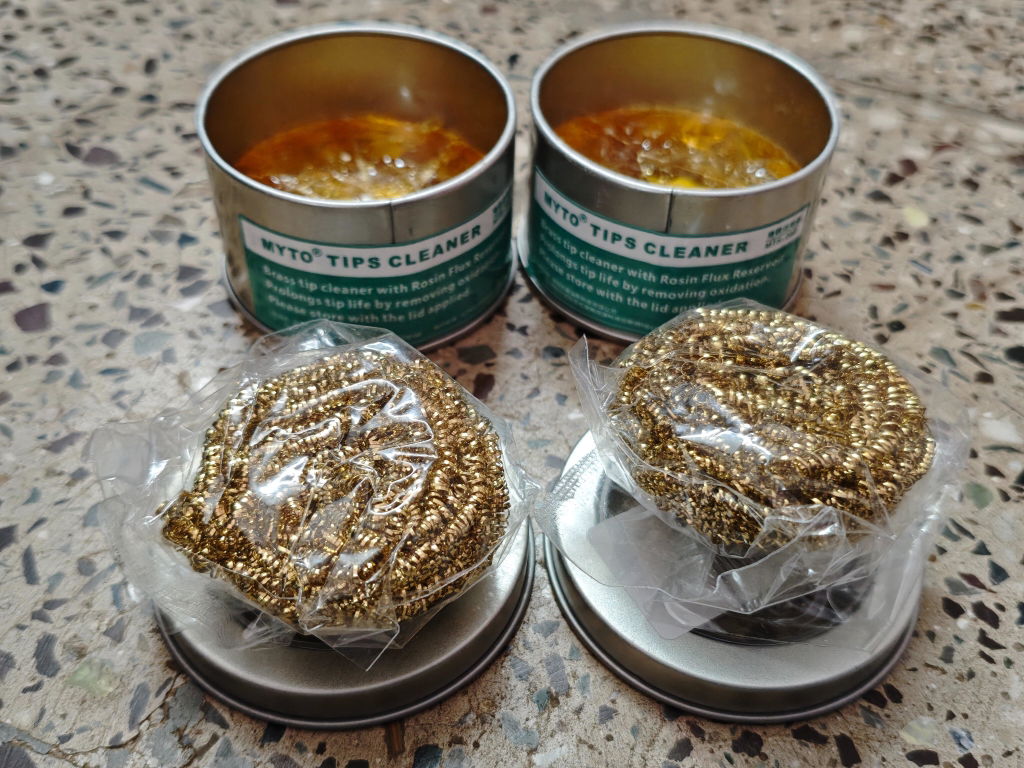
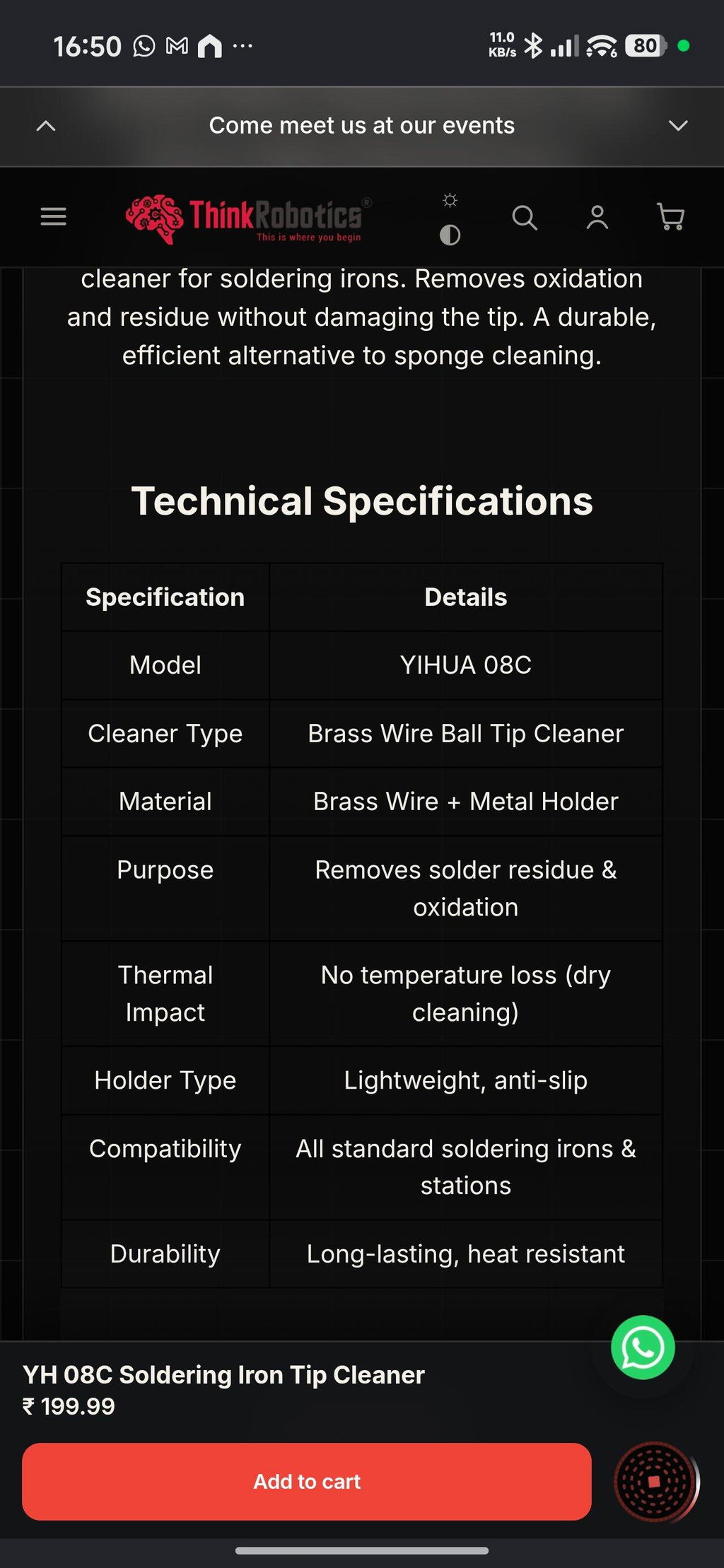
Open tool →Given the fact that this was my first purchase and I made it thinking I was buying genuine Yihua products, this has been a setback. I received a lesser known OEM brand called MYTO and while both the products seem to be similar from appearance, my real contention is the quality and quantity of the brass wool. On top of that not informing the customer about the unavailability of the Yihua product and instead sending a product from a different brand is also antagonising. Henceforth, I might just have to think twice before ordering from ThinkRobotics.
TOF MINIF Range Sensor - UART TOF Time-of-Flight Laser Range Sensor
We are disappointed with our recent order experience. We clearly communicated our requirement for 433 MHz antennas on WhatsApp, but the issue remains unresolved. We have been following up for more than 10 days and are still waiting for a proper refund resolution.
As a regular B2B customer, we expected better support. This experience has affected our trust in ThinkRobotics, and we may have to consider other suppliers for future purchases. We request a fair and prompt refund.
Anodised Aluminium Cup Head Washers (Pack of 10)