Electrical Energy Calculator
Calculate electricity use from power and duration, or constant DC voltage and current. Compare energy use over different operating times in watt-hours, kilowatt-hours and joules.
Open tool
Choose the band count and colors in reading order. Band positions and temperature coefficient colors depend on the resistor model, so check its datasheet. Interrupted-band markings are not supported.
Enable JavaScript to decode bands. Formulas and examples remain available below.
Decode 3, 4, 5 or 6 resistor bands, or find bands for a resistance that the selected scheme can represent exactly.
Select Decode bands or Render bands. Choose the number of bands.
For decoding, choose each color in reading order. The labels identify every band's role.
For rendering, enter a resistance and its unit. Choose the tolerance and any required temperature coefficient.
Read the nominal resistance, tolerance interval and band table. Check any model-dependent coefficient against the component datasheet.
Use Highlight band to connect a position with its meaning. Copy result includes the scheme and qualifications.
Reset clears the entry and restores this instance's starting settings.
Digit bands form a significand. The multiplier sets its decimal scale in ohms.
This tool uses two significant digits for three or four bands. Five or six bands use three significant digits.
A tolerance marking describes an allowed deviation under the component specification. It does not report a measured resistance.
The selected three-band convention uses an absent tolerance band for ±20%. Check that convention against the actual part.
A sixth band can encode a temperature coefficient in ppm/K. Its interpretation still depends on the documented resistor scheme.
Band positions and temperature coefficient colors depend on the resistor model. Check its datasheet. This tool does not support interrupted-band markings.
The tool uses Vishay document 20143. Military, special-purpose and undocumented markings require their own references.
Render bands accepts only exact representations. It does not round your value or identify an available product.
Two-digit code: R = (10a + b) × 10^m Ω
Three-digit code: R = (100a + 10b + c) × 10^m Ω
Marking interval: R_min = R × (1 - t/100), R_max = R × (1 + t/100)
Prefixes: 1 kΩ = 1000 Ω, 1 MΩ = 1000000 Ω
3 bands: yellow, violet, red: 4.7 kΩ, ±20%, 3760 to 5640 Ω. 47 × 100 Ω with the selected absent-tolerance convention.
4 bands: brown, black, red, gold: 1 kΩ, ±5%, 950 to 1050 Ω. 10 × 100 Ω with gold tolerance.
5 bands: brown, black, black, brown, brown: 1 kΩ, ±1%, 990 to 1010 Ω. 100 × 10 Ω with three significant digits.
6 bands: brown, black, black, red, brown, red: 10 kΩ, ±1%, 50 ppm/K with a model qualification. The last red band has the source's model-dependent TCR meaning.
Render 123 Ω with four bands: No exact representation. Two significant digits cannot represent 123 Ω in this scheme.
Vishay, Color Code and Standard Resistance Series, document 20143, revision 28-Aug-2009
Vishay, SMM0207, document 20005, revision 04-Dec-2025
Available now
Calculate electricity use from power and duration, or constant DC voltage and current. Compare energy use over different operating times in watt-hours, kilowatt-hours and joules.
Open tool →Available now
Add up to 20 resistors in series using Ω, kΩ or MΩ for circuit analysis and electricity calculations, with a diagram and running total.
Open tool →Available now
Convert absolute temperatures between Celsius, Fahrenheit and kelvin.
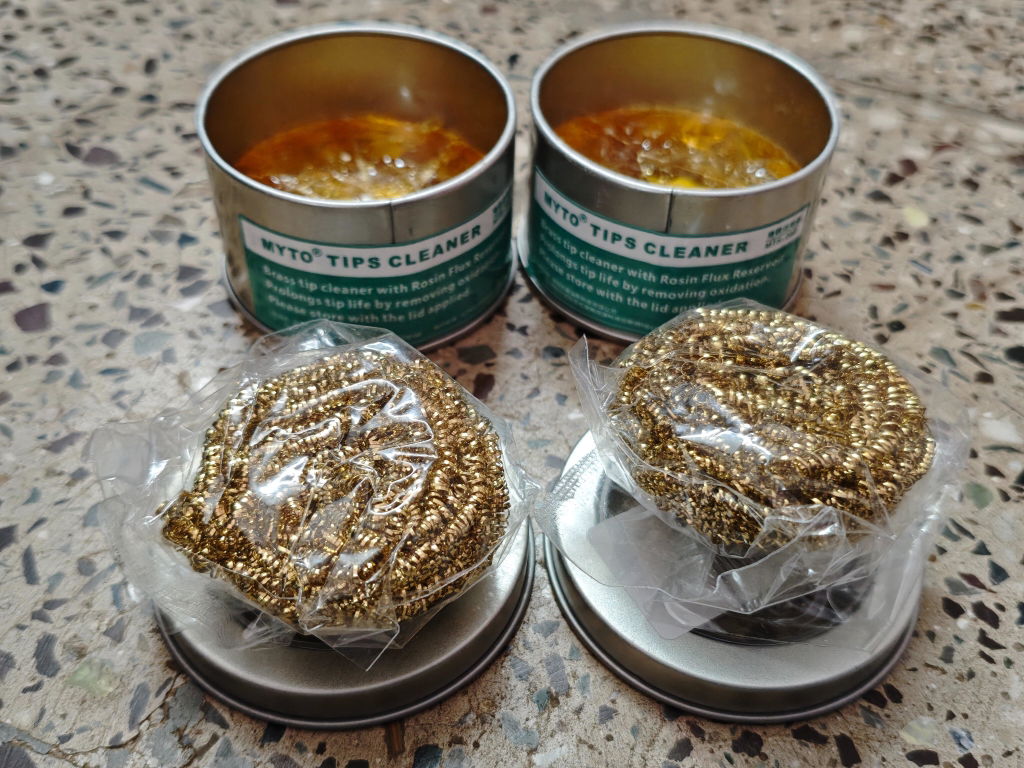
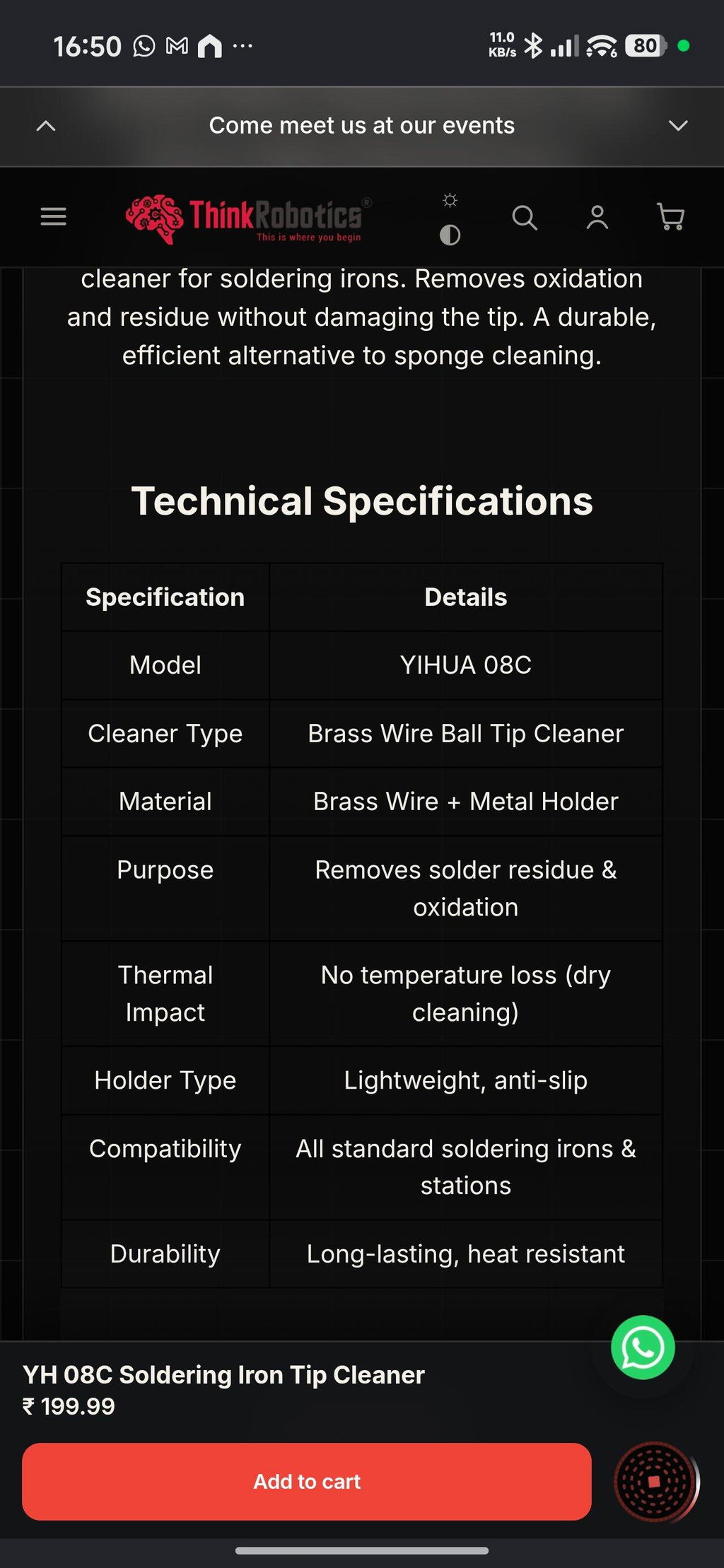
Open tool →Given the fact that this was my first purchase and I made it thinking I was buying genuine Yihua products, this has been a setback. I received a lesser known OEM brand called MYTO and while both the products seem to be similar from appearance, my real contention is the quality and quantity of the brass wool. On top of that not informing the customer about the unavailability of the Yihua product and instead sending a product from a different brand is also antagonising. Henceforth, I might just have to think twice before ordering from ThinkRobotics.
TOF MINIF Range Sensor - UART TOF Time-of-Flight Laser Range Sensor
We are disappointed with our recent order experience. We clearly communicated our requirement for 433 MHz antennas on WhatsApp, but the issue remains unresolved. We have been following up for more than 10 days and are still waiting for a proper refund resolution.
As a regular B2B customer, we expected better support. This experience has affected our trust in ThinkRobotics, and we may have to consider other suppliers for future purchases. We request a fair and prompt refund.
Anodised Aluminium Cup Head Washers (Pack of 10)