Electrical Energy Calculator
Calculate electricity use from power and duration, or constant DC voltage and current. Compare energy use over different operating times in watt-hours, kilowatt-hours and joules.
Open tool
Interactive calculation is unavailable until JavaScript loads. The formulas, worked examples and references below remain available.
Calculate an RL time constant, the inductor current rise or decay percentage at a time, and the time to a target percentage.
Enter the inductance and the resistance with their units. Use the total series resistance, including the coil's winding resistance. Changing a unit reinterprets its number.
Choose Current rise or Current decay.
Choose Current at a time or Time to a target.
Enter the elapsed time, or move the slider along the curve; or enter the target percentage.
Read the result, τ and the curve. The table lists the current at whole time constants.
Copy result copies labeled values. Reset restores the starting example: 10 mH, 100 Ω, rise at 0.1 ms.
The time constant τ equals inductance divided by resistance. After one τ the current in an ideal RL circuit has risen to about 63.2 % of its final value, or decayed to about 36.8 % of its starting value.
An inductor opposes changes in current. When a DC voltage is applied through a resistor, the current rises exponentially toward V/R. When the source is removed and the current has a path through the resistance, it decays exponentially toward zero. Five time constants give about 99.33 % rise or 0.67 % remaining. The ideal response never reaches its endpoint in finite time.
R is the total resistance in the current path: the resistor, the coil's winding resistance and the source or switch resistance. Using only the external resistor overestimates τ. A larger resistance makes the response faster, which is why τ is L divided by R, not L times R.
This model assumes constant L and R, an ideal step source and a single current path. It omits core saturation, winding capacitance, eddy currents and component tolerance. The percentage is the fraction of current, not of stored energy.
Interrupting inductor current without a discharge path produces a large voltage spike. The decay result assumes a defined path, such as a flyback diode and resistor. It does not estimate that spike.
Time constant: τ = L / R. L is inductance in henries, R is total series resistance in ohms and τ is time in seconds.
Current rise: i(t) / I_final = 1 − exp(−t / τ). The reference is the final current V / R.
Current decay: i(t) / I_0 = exp(−t / τ). The reference is the initial current.
Rise time to a target: t = −τ × ln(1 − f), for 0 ≤ f < 1.
Decay time to a target: t = −τ × ln(f), for 0 < f ≤ 1.
Percentage: Percentage = 100 × f. exp is the exponential function and ln is the natural logarithm.
L = 10 mH, R = 100 Ω, rise at t = 0.1 ms: 63.2121 % of final current; τ = 100 μs. τ = 0.01 H ÷ 100 Ω = 0.0001 s, so t is one time constant and the current is 1 − exp(−1) of its final value.
Same coil, rise to 90 %: 230.259 μs. t = −0.1 ms × ln(0.1) = 2.30259τ.
Same coil, decay to 50 %: 69.3147 μs. τ × ln 2 is the half-life of the current.
Same coil, decay at t = 0.5 ms: 0.673795 % of initial current. Five time constants leave exp(−5) of the current.
L = 10 mH, R = 100 Ω entered as L × R: Wrong: 1 H·Ω is not a time. A larger resistance makes the RL response faster, so τ is L divided by R.
Same coil, rise to 100 %: No finite time. The ideal response approaches 100 % asymptotically.
Available now
Calculate electricity use from power and duration, or constant DC voltage and current. Compare energy use over different operating times in watt-hours, kilowatt-hours and joules.
Open tool →Available now
Add up to 20 resistors in series using Ω, kΩ or MΩ for circuit analysis and electricity calculations, with a diagram and running total.
Open tool →Available now
Convert absolute temperatures between Celsius, Fahrenheit and kelvin.
Open tool →Nice audio board working as expected.
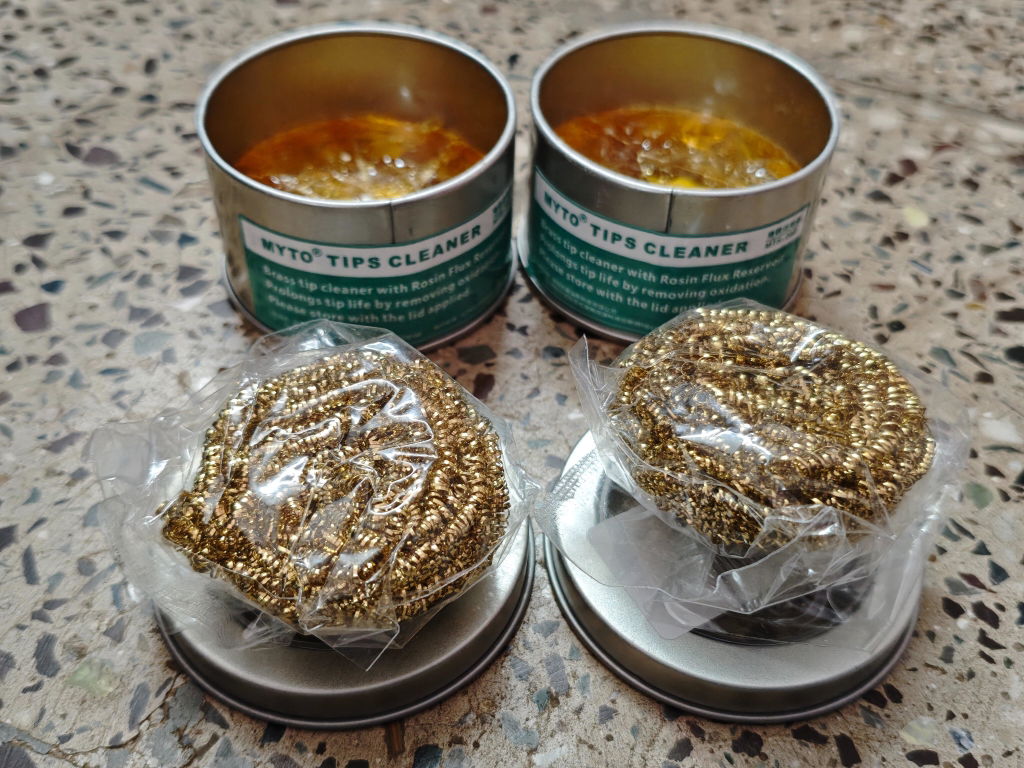
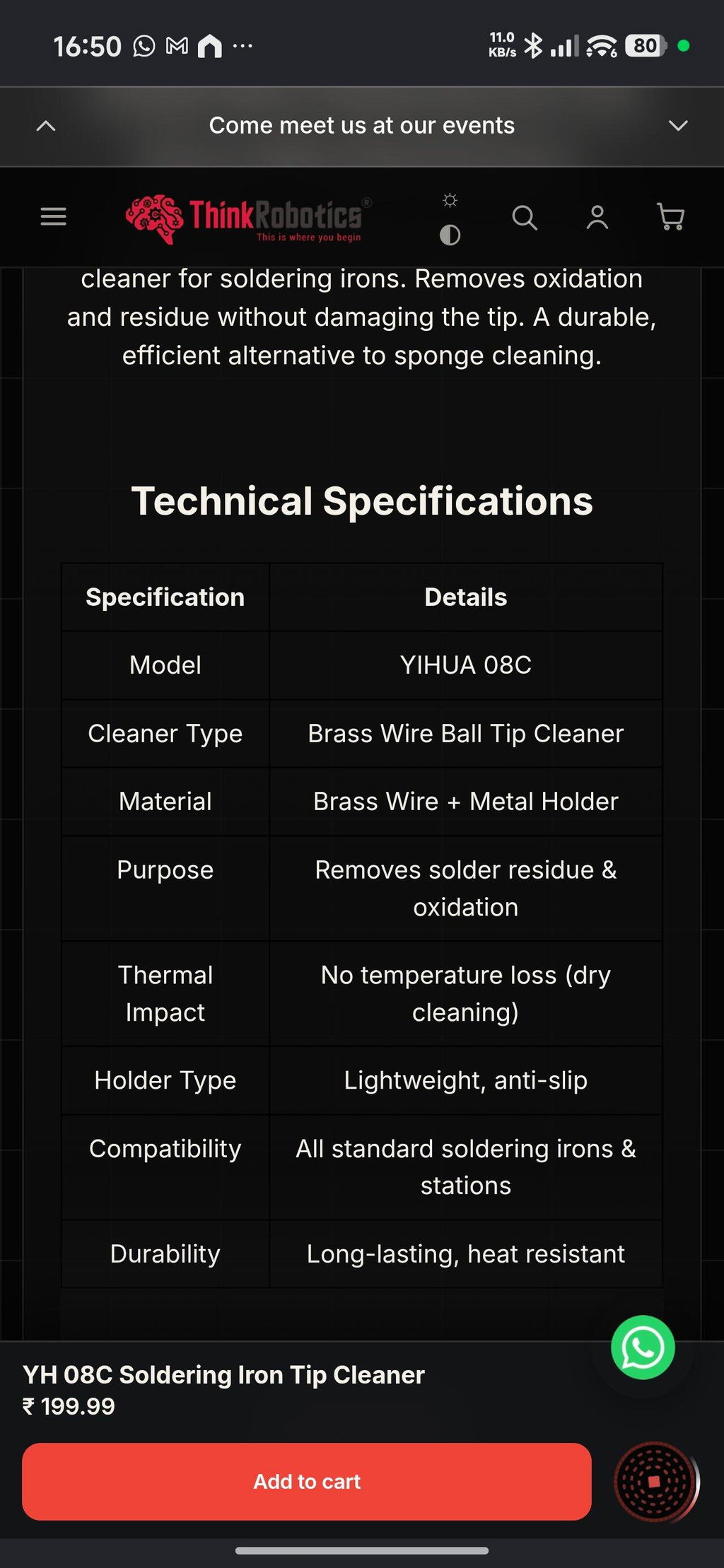
Given the fact that this was my first purchase and I made it thinking I was buying genuine Yihua products, this has been a setback. I received a lesser known OEM brand called MYTO and while both the products seem to be similar from appearance, my real contention is the quality and quantity of the brass wool. On top of that not informing the customer about the unavailability of the Yihua product and instead sending a product from a different brand is also antagonising. Henceforth, I might just have to think twice before ordering from ThinkRobotics.
TOF MINIF Range Sensor - UART TOF Time-of-Flight Laser Range Sensor
We are disappointed with our recent order experience. We clearly communicated our requirement for 433 MHz antennas on WhatsApp, but the issue remains unresolved. We have been following up for more than 10 days and are still waiting for a proper refund resolution.
As a regular B2B customer, we expected better support. This experience has affected our trust in ThinkRobotics, and we may have to consider other suppliers for future purchases. We request a fair and prompt refund.
Anodised Aluminium Cup Head Washers (Pack of 10)