Electrical Energy Calculator
Calculate electricity use from power and duration, or constant DC voltage and current. Compare energy use over different operating times in watt-hours, kilowatt-hours and joules.
Open tool
Interactive calculation is unavailable until JavaScript loads. The formulas, worked examples and references below remain available.
First-pass sizing of a stand-alone solar system: panel power from daily energy and peak sun hours, battery capacity for days of autonomy and depth of discharge, and charge-controller current.
Enter the daily energy use, or choose Average power and hours and enter both.
Enter the system (battery) voltage and the peak sun hours for your site in its worst month.
Keep or change the array losses and the charge efficiency.
Enter the days of autonomy and the depth of discharge for your battery type.
Optionally enter a panel rating (and its short-circuit current for a PWM controller), and keep or change the controller margin.
Read the array, battery and controller sizes and the diagram. Copy result copies all three; Reset clears the values and restores the starting ones.
A stand-alone solar system must make, on an average day of its worst month, the energy its load uses, and store enough to ride through days without sun. The sizes follow from three questions: how much energy per day, how much sun, and how many days of storage.
Peak sun hours are the day's solar energy expressed as hours of full 1 kW/m2 sunshine, the condition at which panels are rated. Five peak sun hours means a 100 W panel collects about 500 Wh before losses. Dirt, wiring, mismatch and similar losses take about 14% in NREL's PVWatts defaults, and battery charging and the controller take more.
The battery stores the daily energy times the days of autonomy. Because only part of a battery should be used, the stored energy is divided by the depth of discharge: Penn State gives 20 to 80% depending on the battery type. Dividing watt-hours by the system voltage gives ampere-hours.
An MPPT controller converts the array's power to the battery voltage, so its output current is about the array watts divided by the battery voltage. A PWM controller passes the panels' current straight through, so it is sized from their short-circuit current. Either way a margin of 125 to 130% allows for sunlight brighter than the rating.
Limitations: this is a first pass. It uses one peak-sun-hour figure and one loss figure, ignores panel and battery temperature, tilt, shading and seasonal variation, does not check panel string voltage against the controller, and treats every panel as identical. Confirm with a site-specific solar resource and the manufacturers' data sheets.
Daily energy: E = P × h when the load is given as average power P for h hours per day.
Array power: P_array = E / (H_psh × (1 - L) × η_c). H_psh is peak sun hours, L the array losses, η_c the charge efficiency.
Panels: N = P_array / P_panel, rounded up.
Battery: E_batt = E × N_a / D; capacity = E_batt / V. N_a is days of autonomy, D the depth of discharge, V the system voltage.
MPPT controller: I = k × P_installed / V, with k the controller margin.
PWM controller: I = k × N × I_sc.
Array losses: L = 1 - (1 - L₁) × (1 - L₂) × …, so PVWatts' default parts give 14%.
1,200 Wh per day, 12 V, 5 peak sun hours, 14% losses, 3 days, 50% depth of discharge, 100 W panels: 3 panels (300 W), 600 Ah at 12 V, 31.25 A MPPT. 279.1 W needed; 7,200 Wh of battery; the 300 W array makes 1,290 Wh on a design day.
Same with 90% charge efficiency: 4 panels (400 W), 41.67 A MPPT. 310.1 W needed; 400 W ÷ 12 V × 1.25 = 41.67 A, Arizona Extension's own example.
Sensor: 2 W for 24 h, 12 V, 4 peak sun hours, 90% charge efficiency, 3 days, 80% depth of discharge, 20 W panel with Isc 1.31 A: 1 panel, 15 Ah, PWM 1.638 A. 48 Wh per day; 1.31 A × 1.25 = 1.64 A, Arizona's PWM example.
24 V cabin: 3,000 Wh per day, 4 peak sun hours, 95% efficiency, 2 days, 80% depth of discharge, 400 W panels: 3 panels (1,200 W), 312.5 Ah, 62.5 A MPPT. 918 W needed.
Common mistake: 12 hours of daylight used as peak sun hours: An array less than half the size it should be. At 12 instead of 5 peak sun hours the first example would ask for only 116.3 W.
Penn State AE 868: Stand-alone system sizing
PVEducation: Average Solar Radiation
University of Arizona Cooperative Extension az1983: Stand Alone Photovoltaic (PV) Systems
IEA PVPS T3-05:1998: Recommended Practices for Charge Controllers
Morningstar: TrakStar MPPT Technology and Maximum Input Power
OpenStax University Physics Volume 2, 9.5 Electrical Energy and Power
Available now
Calculate electricity use from power and duration, or constant DC voltage and current. Compare energy use over different operating times in watt-hours, kilowatt-hours and joules.
Open tool →Available now
Add up to 20 resistors in series using Ω, kΩ or MΩ for circuit analysis and electricity calculations, with a diagram and running total.
Open tool →Available now
Convert absolute temperatures between Celsius, Fahrenheit and kelvin.
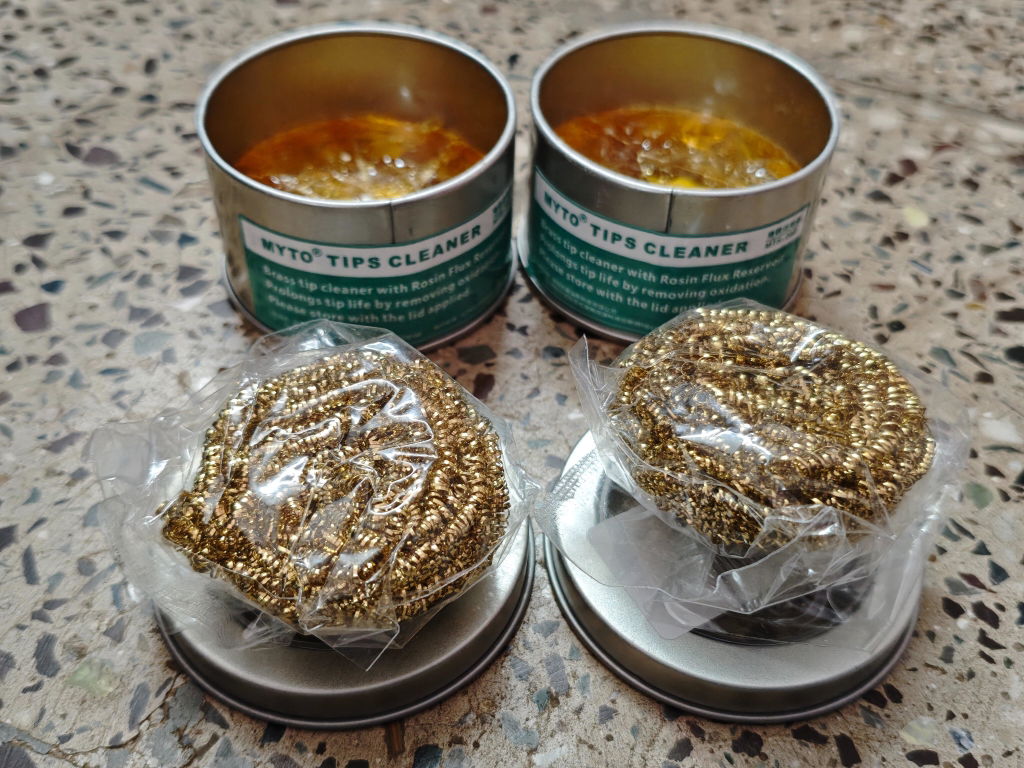
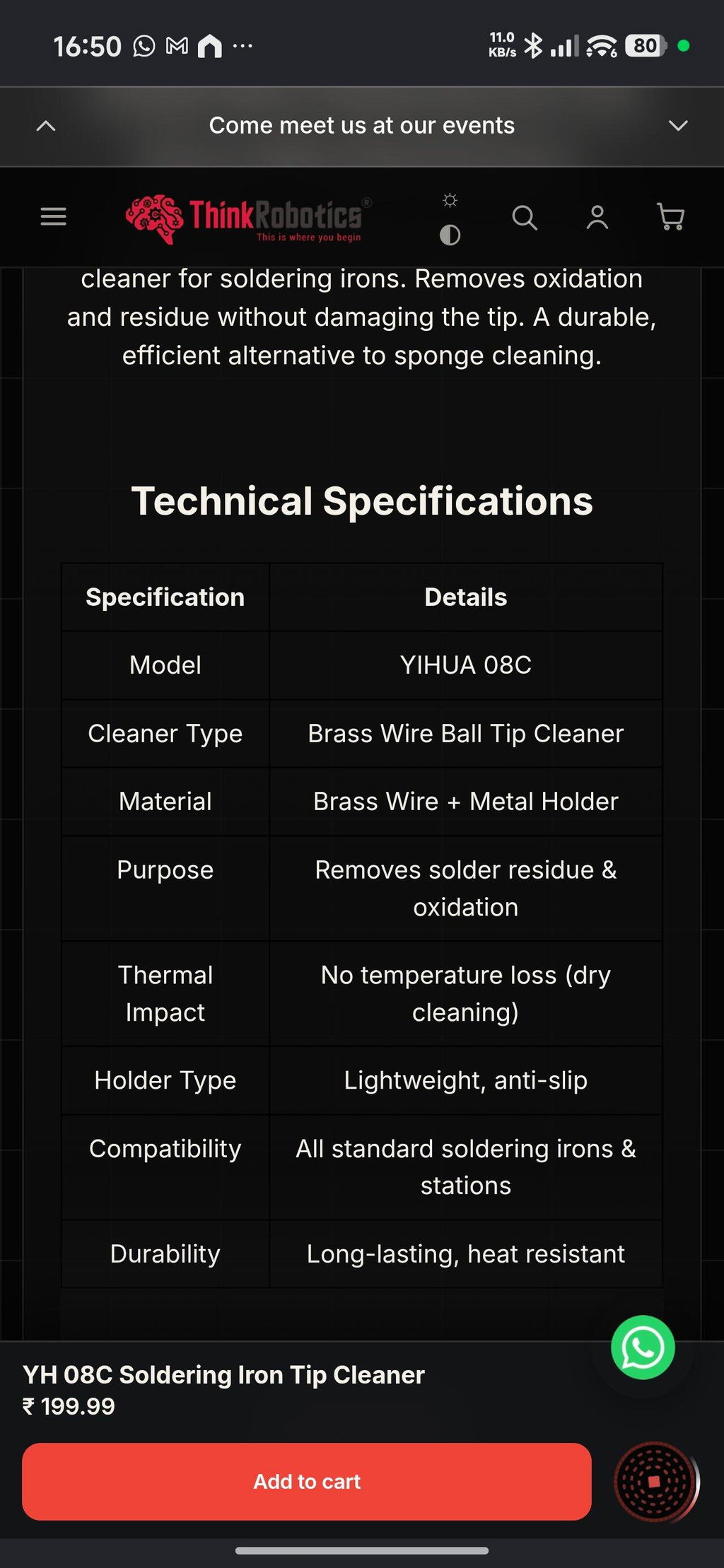
Open tool →Given the fact that this was my first purchase and I made it thinking I was buying genuine Yihua products, this has been a setback. I received a lesser known OEM brand called MYTO and while both the products seem to be similar from appearance, my real contention is the quality and quantity of the brass wool. On top of that not informing the customer about the unavailability of the Yihua product and instead sending a product from a different brand is also antagonising. Henceforth, I might just have to think twice before ordering from ThinkRobotics.
TOF MINIF Range Sensor - UART TOF Time-of-Flight Laser Range Sensor
We are disappointed with our recent order experience. We clearly communicated our requirement for 433 MHz antennas on WhatsApp, but the issue remains unresolved. We have been following up for more than 10 days and are still waiting for a proper refund resolution.
As a regular B2B customer, we expected better support. This experience has affected our trust in ThinkRobotics, and we may have to consider other suppliers for future purchases. We request a fair and prompt refund.
Anodised Aluminium Cup Head Washers (Pack of 10)