Electrical Energy Calculator
Calculate electricity use from power and duration, or constant DC voltage and current. Compare energy use over different operating times in watt-hours, kilowatt-hours and joules.
Open tool
Interactive calculation is unavailable until JavaScript loads. The formulas, worked examples and references below remain available.
Calculate wheel circumference from diameter or radius, the distance rolled in a number of revolutions, and the revolutions needed for a distance.
Choose whether you measured the diameter or the radius, then enter the size and its unit, or drag the size slider.
Read the circumference: the distance the wheel rolls in one full turn.
Choose Distance from revolutions and enter a number of turns, or choose Revolutions for a distance and enter a distance and its unit.
The diagram labels the diameter and the unrolled circumference. It is drawn to the fixed proportion π, not to the scale of your wheel.
Copy result copies the circumference and the travel result with units. Reset restores the starting example: a 65 mm wheel and 10 revolutions.
A wheel that rolls without slipping moves its axle forward by the length of rim that touches the ground. One full turn lays the whole rim, the circumference, along the ground.
The circumference is π times the diameter, or 2π times the radius. Entering the radius as if it were the diameter doubles every distance, so check which one you measured.
Real tyres flatten under load and can slip, so the effective rolling circumference is usually slightly smaller than π times the unloaded diameter. For odometry, roll the wheel 10 full turns, measure the distance and divide by 10.
This tool counts turns, not time. To find speed from wheel RPM, or the distance covered in a given time, use the Wheel RPM, speed and travel-distance calculator.
Assumptions and limitations: the wheel rolls on a flat surface without slipping, and the size is the rolling diameter or radius at the tread. Tyre compression, slip and wear are not modelled, and encoder counts are not converted here.
Circumference: C = π × D = 2π × r; D diameter, r radius, C in the same length unit
Travel distance: d = n × C; n wheel revolutions
Revolutions for a distance: n = d ÷ C
Travel per degree: C ÷ 360 per degree of wheel rotation
Diameter 65 mm, 10 revolutions: C = 204.204 mm; distance = 2.04204 m. π × 65 mm = 204.204 mm per turn, and 10 turns roll ten circumferences.
Radius 50 mm, 0.5 revolutions: C = 314.159 mm; distance = 157.08 mm. A 50 mm radius is a 100 mm diameter. Entering 50 as the diameter would give half the true distance.
Diameter 6 in, travel 10 ft: C = 18.8496 in; revolutions = 6.3662. 10 ft is 120 in, and 120 ÷ 18.8496 = 6.3662 turns, about 6 turns and 131.8°.
OpenStax University Physics Volume 1, 11.1 Rolling Motion
OpenStax University Physics Volume 1, 10.1 Rotational Variables
NIST Guide to the SI, Appendix B.8: Factors for Units Listed Alphabetically
Available now
Calculate electricity use from power and duration, or constant DC voltage and current. Compare energy use over different operating times in watt-hours, kilowatt-hours and joules.
Open tool →Available now
Add up to 20 resistors in series using Ω, kΩ or MΩ for circuit analysis and electricity calculations, with a diagram and running total.
Open tool →Available now
Convert absolute temperatures between Celsius, Fahrenheit and kelvin.
Open tool →Nice audio board working as expected.
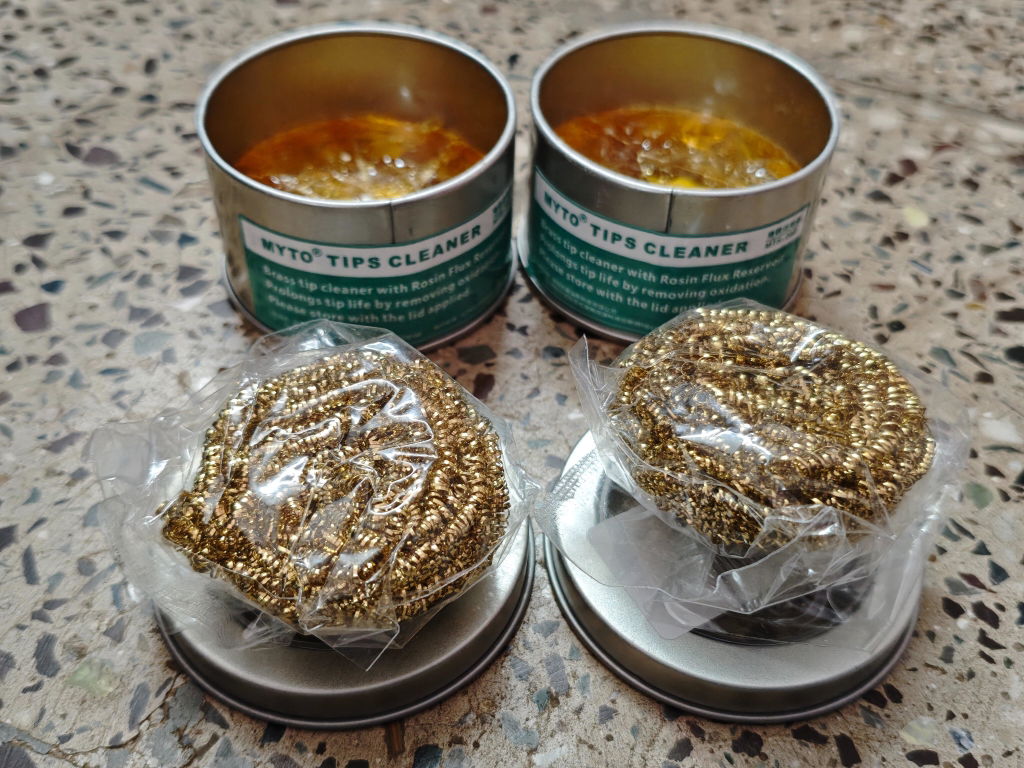
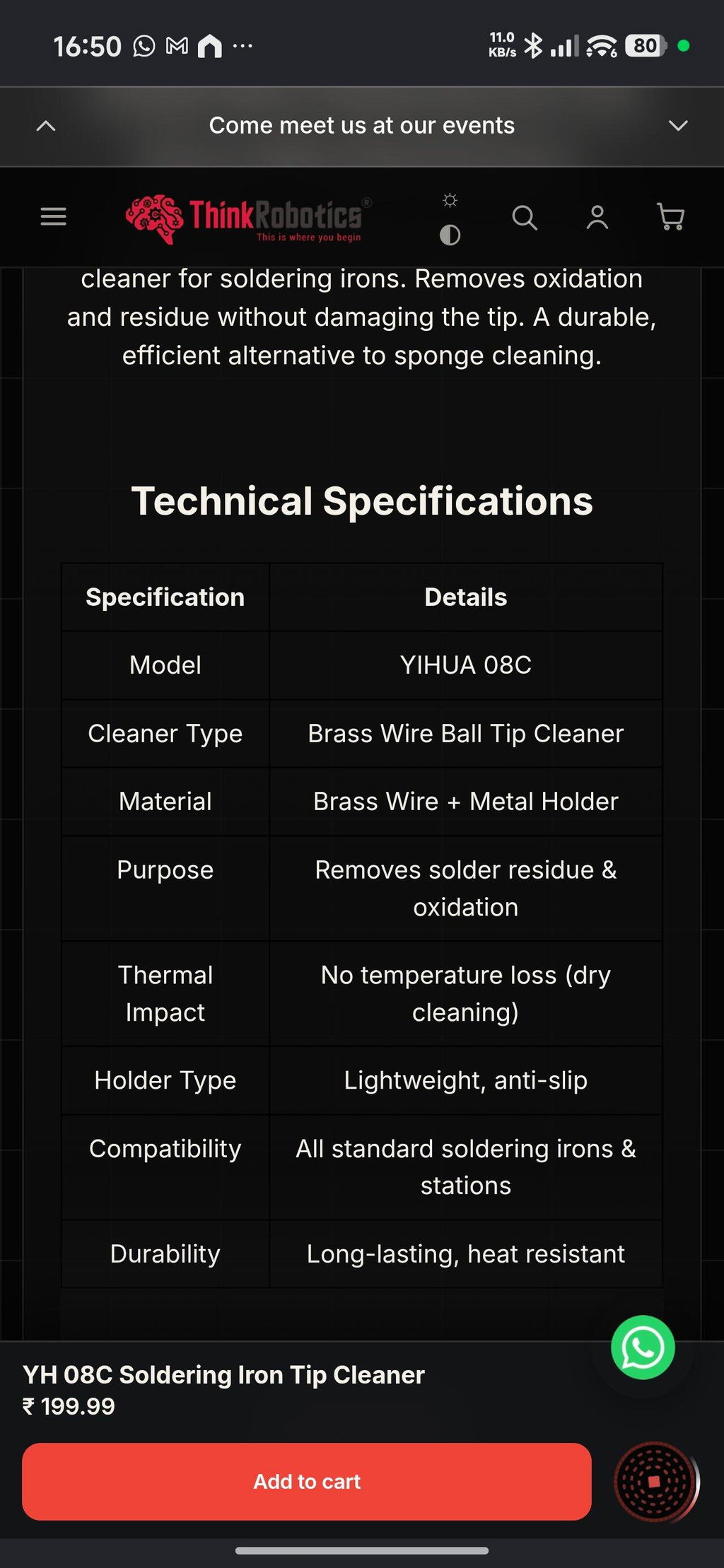
Given the fact that this was my first purchase and I made it thinking I was buying genuine Yihua products, this has been a setback. I received a lesser known OEM brand called MYTO and while both the products seem to be similar from appearance, my real contention is the quality and quantity of the brass wool. On top of that not informing the customer about the unavailability of the Yihua product and instead sending a product from a different brand is also antagonising. Henceforth, I might just have to think twice before ordering from ThinkRobotics.
TOF MINIF Range Sensor - UART TOF Time-of-Flight Laser Range Sensor
We are disappointed with our recent order experience. We clearly communicated our requirement for 433 MHz antennas on WhatsApp, but the issue remains unresolved. We have been following up for more than 10 days and are still waiting for a proper refund resolution.
As a regular B2B customer, we expected better support. This experience has affected our trust in ThinkRobotics, and we may have to consider other suppliers for future purchases. We request a fair and prompt refund.
Anodised Aluminium Cup Head Washers (Pack of 10)