Electrical Energy Calculator
Calculate electricity use from power and duration, or constant DC voltage and current. Compare energy use over different operating times in watt-hours, kilowatt-hours and joules.
Open tool
Interactive calculation is unavailable until JavaScript loads. The formulas, worked examples and references below remain available.
Find the series resistor range that keeps a Zener shunt regulator in regulation over an input voltage and load current range, with Zener and resistor power.
Choose Design to find the allowed resistor range, or Check to test a resistor you have.
Enter the lowest input voltage, and the highest if the supply varies.
Enter the Zener voltage and its tolerance, and the minimum Zener current: the data sheet's knee current I_ZK or a little more.
Enter the lowest and highest load current in mA. Use 0 for the lowest if the load can be disconnected.
Optionally enter the Zener's power rating to see the smallest safe resistor. In Check, enter your resistor.
Read the resistor range, the worst-case Zener and resistor power and the two bars. Copy result copies the labeled values; Reset restores the starting fields.
A Zener shunt regulator is a resistor from the supply to the output and a Zener diode from the output to ground. The Zener conducts whatever current the load does not need, which holds the output near the Zener voltage.
Two corners of the operating range decide the resistor. At the lowest input, the highest Zener voltage and the highest load, the resistor must still pass the load current plus the Zener's minimum current, which sets the largest allowed resistor. At the highest input, the lowest Zener voltage and the lowest load, all the spare current flows through the Zener, which sets its worst-case power.
The minimum Zener current keeps the diode beyond the knee of its breakdown curve, where its voltage is steady. Data sheets give a knee current (I_ZK); designers often allow a little more. A standard tolerance of 5 % means a 5.1 V part can be anywhere from 4.845 V to 5.355 V.
Choosing a resistor below the largest value keeps regulation but raises the Zener's current and power; if a power rating is entered, the tool gives the smallest resistor that keeps the Zener within it. When the smallest is above the largest, no single resistor works: the Zener needs a higher rating, the input range must narrow, or a transistor should carry the load current.
Limitations: the Zener voltage is treated as fixed within its tolerance. Its impedance and temperature coefficient change the output slightly with current and temperature, the power rating falls at high ambient temperature, and the resistor and Zener ratings need margin. The tool does not model transistor-boosted or cascaded regulators, ripple, start-up surges or standard resistor values. A forward-biased diode stack used as a reference can be entered with its total forward voltage as the Zener voltage.
Loop: V_in = (I_Z + I_L) × R_S + V_Z.
Largest resistor: R_max = (V_in,min - V_Z,max) ÷ (I_Z,min + I_L,max).
Highest Zener current: I_Z,max = (V_in,max - V_Z,min) ÷ R_S - I_L,min.
Highest Zener power: P_Z,max = I_Z,max × V_Z,max.
Smallest resistor for a power rating: R_min = (V_in,max - V_Z,min) ÷ (P_Z,rated ÷ V_Z,max + I_L,min).
Resistor power: P_R,max = (V_in,max - V_Z,min)² ÷ R_S.
Tolerance: V_Z,max = V_Z × (1 + t); V_Z,min = V_Z × (1 - t).
9 to 12 V input, 5.1 V ±5 % Zener rated 1.3 W, I_Z,min 5 mA, load 0 to 50 mA: R_max = 66.2727 Ω, R_min = 29.4731 Ω. (9 - 5.355) ÷ (0.005 + 0.05) = 66.2727 Ω. With that resistor and no load at 12 V the Zener carries 107.963 mA and 578.1 mW, inside 1.3 W; the resistor takes 772.5 mW.
12 V input, 5.1 V Zener (0 % tolerance), I_Z,min 5 mA, load 0 to 20 mA: R = 276 Ω; Zener 5 mA with the load, 25 mA without it. Common mistake: designing only for the full load. Unplug the load and the Zener's power rises from 25.5 mW to 127.5 mW; enter 0 as the lowest load.
Check: 100 Ω, 9 to 12 V, 5.1 V (0 %), I_Z,min 5 mA, load 0 to 50 mA: Drops out at 9 V and 50 mA. The resistor supplies (9 - 5.1) ÷ 100 = 39 mA, less than the 50 mA load. R_max is 70.9091 Ω.
9 to 30 V input, 5.1 V ±5 % rated 1.3 W, I_Z,min 5 mA, load 0 to 50 mA: No resistor works: R_min 103.619 Ω > R_max 66.2727 Ω. The input range is too wide for a 1.3 W Zener.
onsemi HBD854/D: TVS/Zener Theory and Design Considerations
Vishay 1N4728A to 1N4761A Zener diode data sheet
OpenStax University Physics Volume 2: 9.5 Electrical Energy and Power
Available now
Calculate electricity use from power and duration, or constant DC voltage and current. Compare energy use over different operating times in watt-hours, kilowatt-hours and joules.
Open tool →Available now
Add up to 20 resistors in series using Ω, kΩ or MΩ for circuit analysis and electricity calculations, with a diagram and running total.
Open tool →Available now
Convert absolute temperatures between Celsius, Fahrenheit and kelvin.
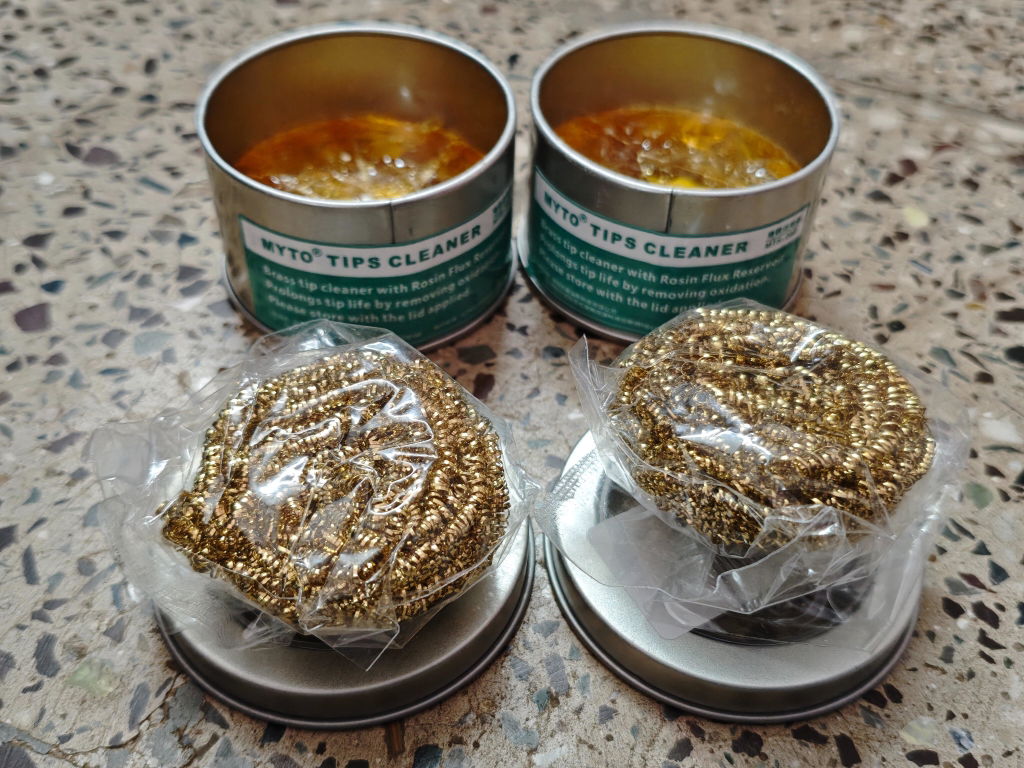
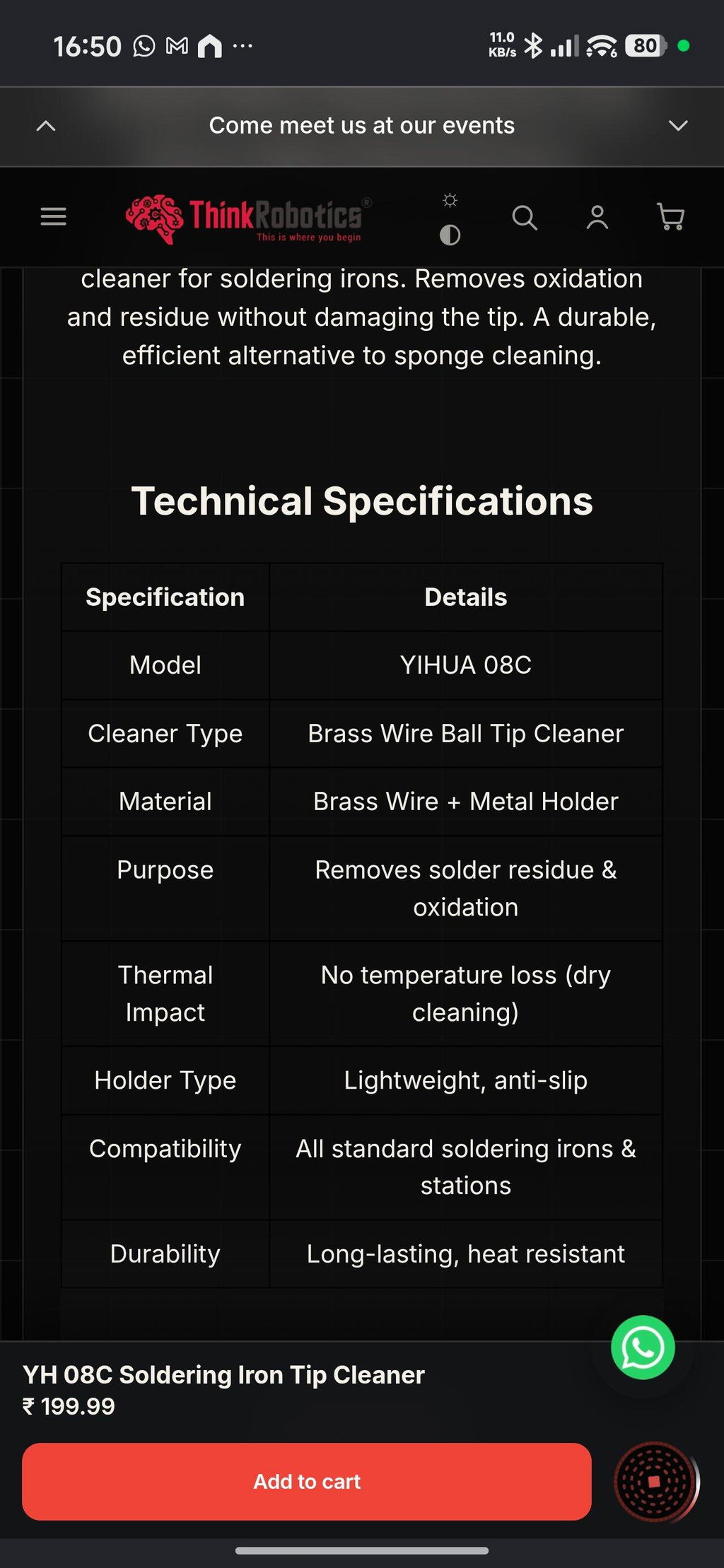
Open tool →Given the fact that this was my first purchase and I made it thinking I was buying genuine Yihua products, this has been a setback. I received a lesser known OEM brand called MYTO and while both the products seem to be similar from appearance, my real contention is the quality and quantity of the brass wool. On top of that not informing the customer about the unavailability of the Yihua product and instead sending a product from a different brand is also antagonising. Henceforth, I might just have to think twice before ordering from ThinkRobotics.
TOF MINIF Range Sensor - UART TOF Time-of-Flight Laser Range Sensor
We are disappointed with our recent order experience. We clearly communicated our requirement for 433 MHz antennas on WhatsApp, but the issue remains unresolved. We have been following up for more than 10 days and are still waiting for a proper refund resolution.
As a regular B2B customer, we expected better support. This experience has affected our trust in ThinkRobotics, and we may have to consider other suppliers for future purchases. We request a fair and prompt refund.
Anodised Aluminium Cup Head Washers (Pack of 10)