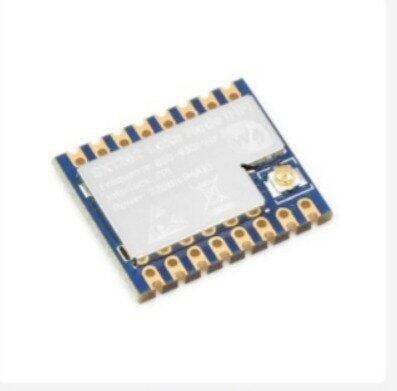

Wireless Robot Control Module: Complete Guide to Remote Control Systems
Wireless Robot Control Module: Complete Guide to Remote Control Systems
Adding wireless control transforms tethered robots into freely moving autonomous or remotely operated machines. Understanding wireless robot control modules helps you select the right technology, implement reliable communication, and build robots responsive to commands from smartphones, computers, or dedicated controllers.
This comprehensive guide examines different wireless control technologies, explains how each works, compares their strengths and weaknesses, and provides practical implementation guidance for building wirelessly controlled robots.
Understanding Wireless Robot Control
Wireless control enables commanding robots without physical cable connections, essential for mobile robots, drones, and remote monitoring applications.
Why Wireless Control Matters
Wired control limits robot range to cable length and creates tangling problems. Wireless freedom enables true mobility, letting robots explore spaces, navigate autonomously with remote override capability, and operate at practical distances.
Remote control also enables safer operation. Robots entering hazardous environments, operating powerful actuators, or performing risky tasks can be commanded from safe distances protecting operators.
Educational robots benefit from wireless control through intuitive smartphone interfaces and collaborative multi-robot projects requiring coordination between separate platforms.
Key Wireless Technologies
Several wireless technologies serve robot control with different characteristics affecting range, data rate, power consumption, and cost.
Bluetooth provides short to medium range (10-100 meters) with low power consumption and smartphone compatibility. Popular for educational and hobby robots.
WiFi offers longer range (50-200 meters) with high data rates enabling video streaming and complex command structures. Common in advanced robots and development platforms.
Radio Frequency (RF) modules using 433 MHz or 2.4 GHz bands provide reliable long-range control (500+ meters) with minimal latency. Used in RC vehicles and drones.
Infrared (IR) enables simple short-range control (5-10 meters) requiring line of sight. Affordable but limited to basic applications.
Each technology suits different applications based on range requirements, data complexity, power constraints, and cost considerations.
Think Robotics provides wireless control modules for Bluetooth, WiFi, and RF communication with Arduino and Raspberry Pi, including comprehensive tutorials for implementing remote control in educational robotics projects.
Bluetooth Modules for Robot Control
Bluetooth dominates educational and hobby robot wireless control due to affordability and smartphone compatibility.
HC-05 and HC-06 Bluetooth Modules
These classic Bluetooth 2.0 modules cost $3 to $8 and interface easily with microcontrollers via serial communication. HC-05 operates in both master and slave modes while HC-06 works only as slave receiving connections from phones or computers.
Connecting to Arduino requires four wires: VCC to 5V or 3.3V (check module specifications), GND to ground, TX to Arduino RX pin, and RX to Arduino TX pin through voltage divider protecting 3.3V input.
Serial communication at 9600 or 38400 baud sends commands as text strings or binary data. Arduino code reads serial data from Bluetooth and executes corresponding actions controlling motors, servos, or other actuators.
HM-10 Bluetooth Low Energy
BLE (Bluetooth Low Energy) modules like HM-10 consume significantly less power than classic Bluetooth, extending battery life for portable robots. BLE 4.0 and 5.0 provide similar range with improved efficiency.
Modern smartphones support BLE through standardized APIs enabling custom app development. BLE's lower power consumption makes it ideal for battery-operated robots requiring extended runtime.
Bluetooth Control Implementation
Basic smartphone control uses Bluetooth terminal apps sending character commands. Sending 'F' commands forward motion, 'B' backward, 'L' left, 'R' right, and 'S' stop. Arduino code maps received characters to motor control functions.
Advanced implementations use custom smartphone apps created with MIT App Inventor or native Android/iOS development providing graphical interfaces with buttons, sliders, and status displays.
Bidirectional communication enables robots sending sensor data, battery status, or diagnostic information back to controllers. This telemetry helps operators make informed decisions and monitor robot health.
Bluetooth Limitations
Bluetooth's 10-100 meter range limits outdoor operation. Obstacles like walls significantly reduce effective range. Multiple Bluetooth devices can interfere, and latency occasionally causes noticeable delays between commands and robot response.
Despite limitations, Bluetooth's simplicity, cost, and smartphone compatibility make it excellent for educational and hobbyist applications.
WiFi Modules for Advanced Control
WiFi provides longer range, higher data rates, and networking capabilities supporting sophisticated robot applications.
ESP8266 WiFi Module
The ESP8266 revolutionized hobby robotics by providing WiFi connectivity at $3 to $8. This module contains its own microcontroller running Arduino-compatible code, functioning as both WiFi adapter and robot brain.
ESP8266 connects to existing WiFi networks or creates its own access point. Robots controlled through web browsers, smartphone apps, or custom software communicate via HTTP requests, WebSockets, or MQTT protocols.
Web-based interfaces enable controlling robots from any device with a browser without installing apps. HTML, CSS, and JavaScript create intuitive control interfaces with real-time feedback and video streaming from connected cameras.
ESP32: Enhanced WiFi and Bluetooth
ESP32 improves on ESP8266 with faster dual-core processor, more memory, both WiFi and Bluetooth, and additional GPIO pins. Costing $8 to $15, ESP32 handles more complex applications including computer vision, sensor fusion, and sophisticated control algorithms.
The dual connectivity enables using WiFi for high-bandwidth video streaming while Bluetooth handles low-latency control commands, optimizing each protocol's strengths.
WiFi Control Implementation
ESP modules run web servers responding to HTTP requests. Control interfaces send GET or POST requests with commands. The microcontroller processes requests and controls robot hardware accordingly.
WebSocket connections enable bidirectional real-time communication with lower latency than HTTP. Control interfaces receive continuous sensor updates while sending commands, creating responsive interactive control.
MQTT protocol provides publish-subscribe messaging enabling multiple devices coordinating through message broker. Multiple robots communicate, share sensor data, and coordinate actions in swarm robotics applications.
WiFi Advantages
WiFi's 50-200 meter range exceeds Bluetooth significantly. High data rates support streaming video, transmitting complex sensor data, and updating software over-the-air. Existing WiFi infrastructure enables robot control throughout homes or facilities without additional hardware.
Power consumption exceeds Bluetooth but remains acceptable for robots with substantial batteries or continuous charging.
Think Robotics offers ESP8266 and ESP32 development boards with robot chassis integration, providing ready platforms for wireless robot development with comprehensive code examples and web interface templates.
RF Radio Modules for Long Range
Radio frequency modules provide the longest range and most reliable control for demanding applications.
NRF24L01 2.4GHz Modules
NRF24L01 modules cost $2 to $5 and communicate up to 1000 meters with proper antennas and clear line of sight. These transceivers enable bidirectional communication between robots and controllers or between multiple robots.
Using SPI interface with Arduino, NRF24 modules create reliable data links with acknowledgment packets confirming successful transmission. Multi-channel operation enables multiple robot-controller pairs operating simultaneously without interference.
Low latency makes NRF24 suitable for real-time control requiring immediate response. RC car racing and drone control benefit from this rapid communication.
433MHz RF Modules
Simple 433MHz transmitter-receiver pairs provide one-way communication at extremely low cost ($1-3) with ranges exceeding 500 meters. These basic modules lack acknowledgment or error correction but work reliably for simple control applications.
Transmitters connect to controller buttons sending serial data when pressed. Receivers decode signals triggering corresponding robot actions. Simplicity and range make these popular for RC toys and basic teleoperation.
LoRa Long Range Modules
LoRa (Long Range) technology enables communication over kilometers with low power consumption. Modules cost $15 to $30 but provide exceptional range, useful for outdoor robots, agricultural applications, or exploration systems requiring extensive operating areas.
LoRa trades data rate for range, supporting lower bandwidth suitable for telemetry and control commands but not video streaming. Battery-powered robots benefit from LoRa's efficiency enabling extended operation.
RF Control Implementation
RF modules require careful attention to power supply quality, antenna selection, and interference mitigation. Clean regulated power and proper grounding prevent transmission issues.
Libraries like RF24 for NRF24L01 or RadioHead for various modules simplify programming. Code defines transmit and receive addresses, handles packet formatting, and manages acknowledgments ensuring reliable communication.
Dedicated controllers using Arduino or microcontrollers with joysticks, buttons, and displays create professional RC transmitters for robot control.
Infrared Control for Simple Applications
IR remote control offers the simplest wireless control solution for basic applications.
IR Receivers and Remote Controls
IR receiver modules cost under $1 and decode signals from TV-style remote controls. Connecting to Arduino digital pin with appropriate pull-up configuration enables detecting button presses from standard remotes.
Libraries like IRremote decode various remote control protocols. Code maps button codes to robot functions, enabling control with existing remotes lying around homes.
IR Limitations
Line-of-sight requirement limits IR to applications where operator always faces robot. Bright sunlight interferes with IR signals, making outdoor use problematic. Range typically limits to 5-10 meters with standard remotes.
Despite limitations, IR provides dead-simple implementation perfect for introductory projects before progressing to more capable wireless technologies.
Selecting the Right Wireless Module
Choose wireless technology matching your project requirements.
For Educational Robots
Bluetooth provides the best balance of simplicity, cost, and capability for learning. Smartphone compatibility enables immediate control without building separate controllers. HC-05/HC-06 modules teach serial communication fundamentals.
For Home/Indoor Robots
WiFi enables control throughout homes using existing network infrastructure. Web interfaces work from any device. Video streaming and complex telemetry suit advanced projects.
For Outdoor/Long Range
RF modules provide necessary range and reliability. NRF24L01 balances capability and cost. LoRa serves applications requiring extreme range.
For Quick Prototypes
IR enables testing control concepts rapidly. Use existing remotes without building controllers. Perfect for initial experimentation before implementing more sophisticated wireless systems.
For Competition/Racing
2.4GHz RF provides low latency essential for racing and precision maneuvering. Dedicated RC equipment offers professional-grade reliability.
Think Robotics offers wireless module comparison kits enabling hands-on evaluation of different technologies, helping students understand practical differences in range, latency, and implementation complexity.
Implementation Best Practices
Successful wireless control requires attention to several practical considerations.
Power Supply Quality
Wireless modules are sensitive to power supply noise. Use regulated power supplies with adequate filtering capacitors near module power pins. Separate power supplies for motors versus electronics prevent motor noise from interfering with wireless communication.
Antenna Considerations
Proper antenna orientation maximizes range. Keep antennas away from metal components causing interference. External antennas improve performance for modules supporting antenna connectors.
Failsafe Implementation
Always implement failsafe behaviors handling lost communication. Timeout timers detect missing commands, triggering safe behaviors like stopping motors, returning to home position, or activating warning indicators.
Security Considerations
Wireless control creates security vulnerabilities. Implement authentication preventing unauthorized control. Encrypt sensitive data protecting against eavesdropping. Change default passwords and pairing PINs on Bluetooth modules.
Testing and Debugging
Test wireless range in actual operating environment. Obstacles, interference, and environmental factors affect real-world performance. Walk through intended operating area verifying reliable communication throughout.
Debug using serial monitor logging received commands, connection status, and signal strength when available. LED indicators showing connection state help identify communication problems quickly.
Advanced Wireless Control Features
Beyond basic remote control, advanced features enhance robot capabilities.
Autonomous Operation with Override
Combine autonomous navigation with wireless override capability. Robots operate independently but operators intervene when necessary, providing safety backup for autonomous systems.
Multi-Robot Coordination
Wireless communication enables swarm robotics where multiple robots coordinate actions. Shared sensor data, synchronized movements, or collaborative task completion demonstrate advanced coordination.
Telemetry and Monitoring
Continuous data transmission from robots to operators provides situational awareness. Sensor readings, battery status, position information, and diagnostic data inform operational decisions and detect problems early.
Over-the-Air Updates
WiFi-connected robots can receive firmware updates wirelessly. This capability enables bug fixes, feature additions, and parameter tuning without physical access to robots.
Conclusion
Wireless robot control modules enable remote operation and true mobility for robotics projects. Bluetooth provides affordable, smartphone-compatible control for educational and hobby applications. WiFi offers longer range, higher data rates, and networking capabilities for advanced systems. RF modules deliver exceptional range and reliability for outdoor and competition robots. IR serves simple introductory applications.
Selecting appropriate wireless technology depends on range requirements, data complexity, power constraints, and cost considerations. Implementation requires attention to power supply quality, antenna configuration, failsafe programming, and security.
Understanding wireless control modules and their proper implementation enables building sophisticated remotely operated or semi-autonomous robots. Whether controlling educational robots from smartphones, piloting competition vehicles, or operating exploration platforms, wireless communication provides the freedom and capability making robotics projects truly mobile and practical.