Best seller

Waveshare

Luckfox Pico Mini RV1103 Linux Micro Development Board

SKU: WVSH0292

₹ 1,799.99

In stock | Ready to ship

Select variant

None
Flash
⚠ Only a few left in stock. Order soon.
ā± High demand right now.
šŸ“¦ Min order 1
Chat with us on WhatsApp We reply quickly! Contact Us
Luckfox Pico Mini RV1103 Linux Micro Development BoardNone₹ 1,799.99
Ask AI about this product

Luckfox Pico Mini RV1103 Linux Micro Development Board

Ā 

Ā 

Specifications

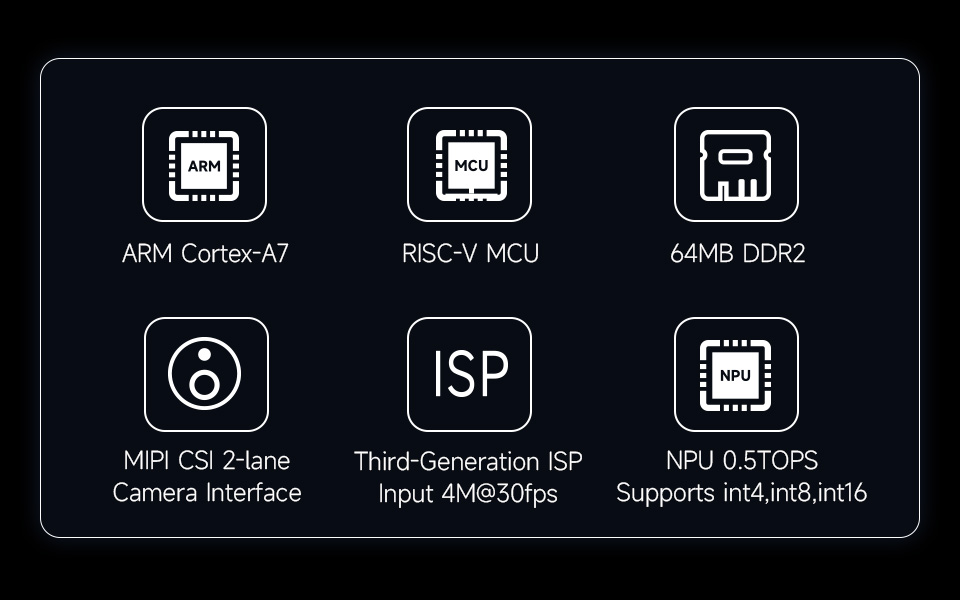
Processor CortexĀ A7@1.2GHzĀ + RISC-V
NPU 0.5TOPS, supports int4, int8 and int16
ISP Input 4M @30fps (Max)
Memory 64MB DDR2
USB USB 2.0 Host/Device
Camera MIPI CSI 2-lane
GPIO 17 Ɨ GPIO pins
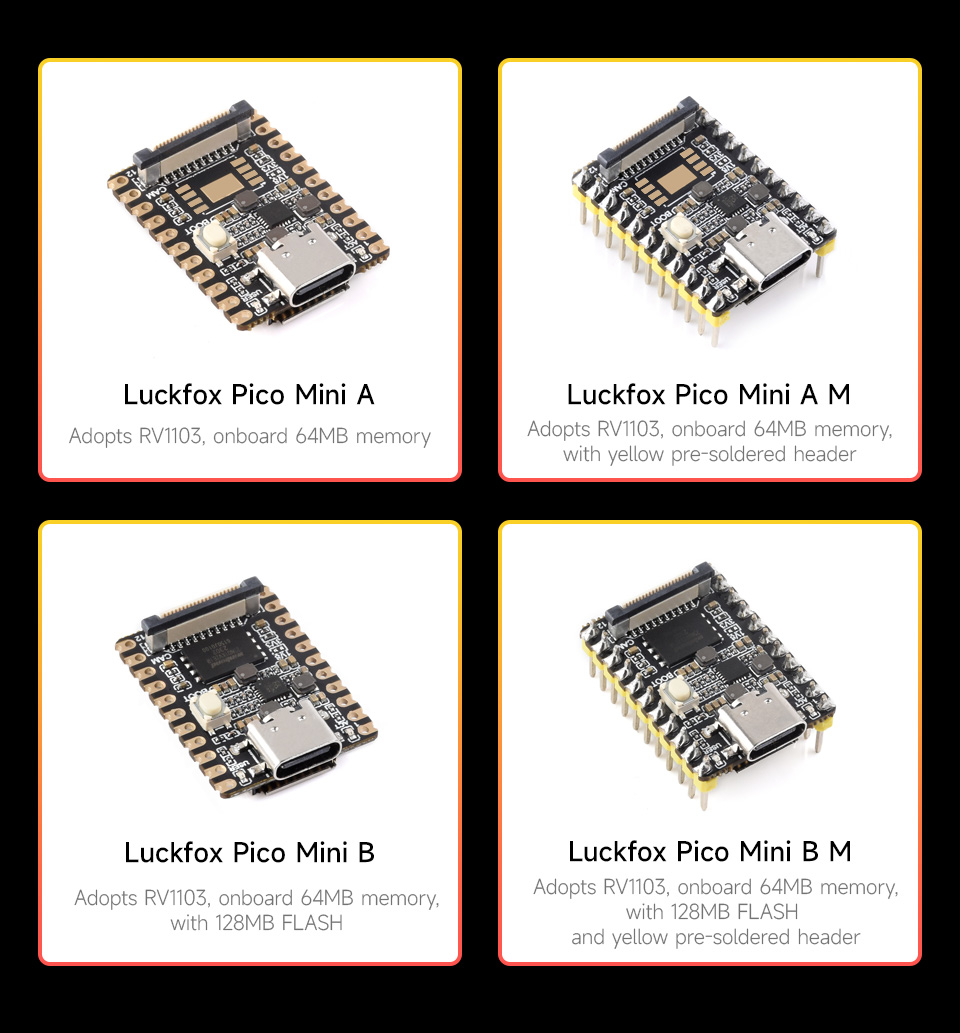
Default Storage Mini A: TF card (Not included)
Mini B: SPI NAND FLASH (128MB)

Ā 

Version And Pinheader Options

Ā 

Exquisite Appearance, Compact Size

Castellated Holes With Immersion Gold Design, Highly Integrated Packaging, Easy To Embed Into Various Product Applications

Ā 

Highly Integrated And Powerful Performance

Integrates CPU, NPU, ISP And Other Processors

  • Single-core ARM Cortex-A7 32-bit core with integrated NEON and FPU
  • Built-in Rockchip self-developed 4th generation NPU, features high computing precision and supports int4, int8, and int16 hybrid quantization. The computing power of int8 is 0.5 TOPS, and up to 1.0 TOPS with int4
  • Built-in self-developed third-generation ISP3.2, supports 4-Megapixel, with multiple image enhancement and correction algorithms such as HDR, WDR, multi-level noise reduction, etc.
  • Features powerful encoding performance, supports intelligent encoding mode and adaptive stream saving according to the scene, saves more than 50% bit rate of the conventional CBR mode so that the images from camera are high-definition with smaller size, double the storage space
  • Built-in RISC-V MCU supports low power consumption and fast start-up, supports 250ms fast picture capture and loading AI model library at the same time to realize face recognition "in one second"
  • Built-in 16-bit DRAM DDR2, which is capable of sustaining demanding memory bandwidths
  • Integrated with built-in POR, audio codec and MAC PHY

Ā 

Easier To Develop

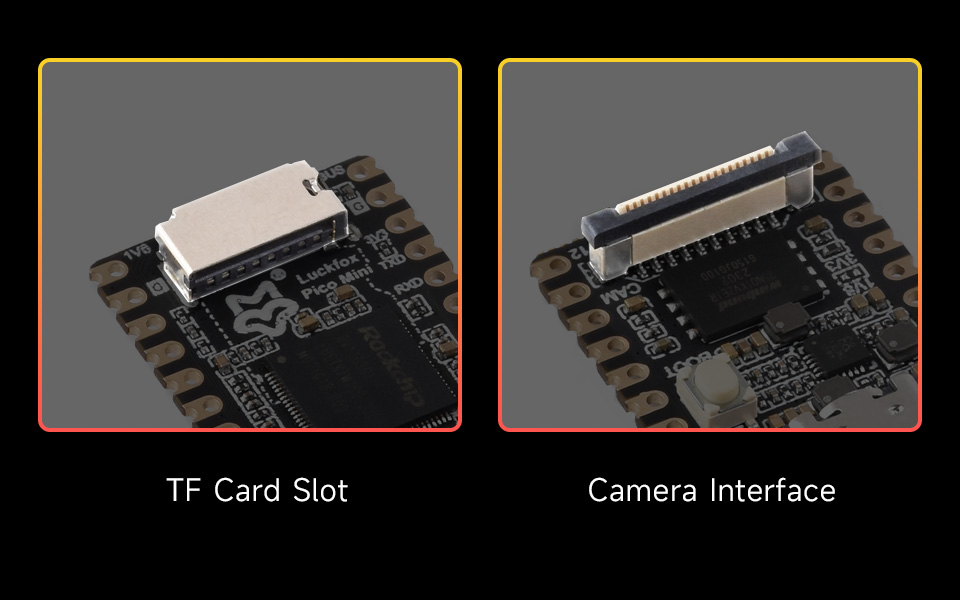
Integrates TF Card Slot And Camera Interface

Ā 

SLC NAND FLASH

For A Better User Experience


Ā 

Suitable For More Application Scenarios

Ā 

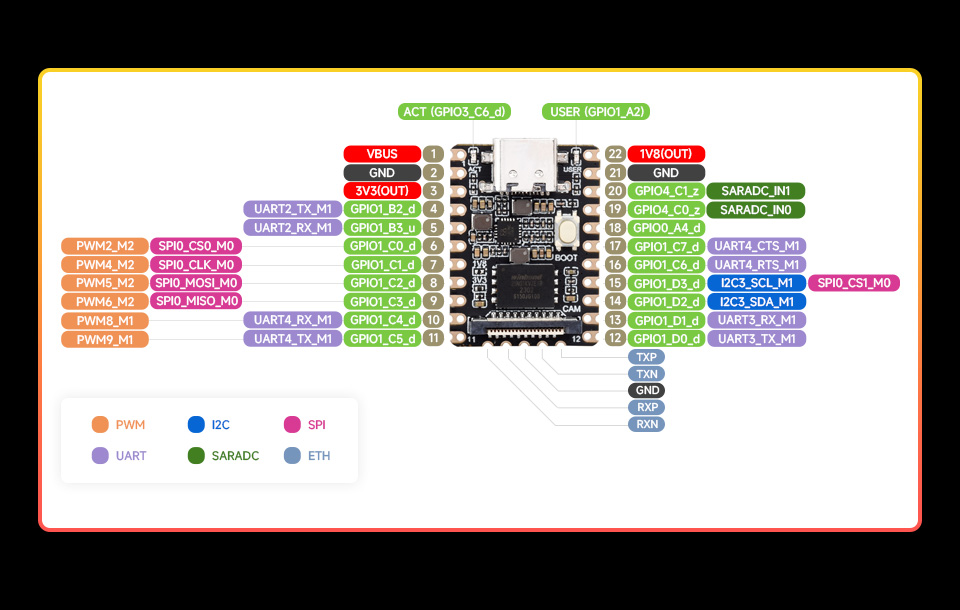
Pin Definition

Ā 

What's On Board

  1. USB Type-C connector
    for power supply and program burning
  2. ACT-LED
    system operation status indicator (in the default system)
  3. USER-LED
  4. BOOT button
    Press it when powering on to enter download mode
  5. SLC NAND FLASH
    Only available on the B version, and reserved pads for A version
  6. CSI camera interface
    MIPI CSI 2-lane
  7. TF card slot
  8. RV1106
    Vision processor SoC with built-in ARM Cortex-A7 core

Ā 

Outline Dimensions


Luckfox Pico Product Selection

PRODUCT MAIN CHIP MEMORY NPU ISP DEFAULT STORAGE FEATURES

LUCKFOX PICO MINI A
RV1103G1 64MB 0.5TOPS, supports int4, int8 and int16 Input 4M @30fps (Max) TF card (Not included) Onboard Type-C port, MIPI CSI Interface, GPIO, etc.

LUCKFOX PICO MINI B
SPI NAND FLASH (128MB)

LUCKFOX PICO
TF card (Not included) Onboard Type-C port, MIPI CSI Interface, GPIO, etc.

LUCKFOX PICO PLUS
SPI NAND FLASH (128MB) Onboard Type-C port, MIPI CSI Interface, GPIO, Ethernet port, etc.

LUCKFOX PICO PRO
RV1106G2 128MB Input 5M @30fps (Max) SPI NAND FLASH (256MB) Onboard Type-C port, MIPI CSI Interface, GPIO, Ethernet port, RTC battery header, etc.

LUCKFOX PICO MAX
RV1106G3 256MB


What is the processing and AI capability of the board?
It uses a single core ARM Cortex-A7 32 bit CPU at 1.2 GHz with NEON and FPU. It also includes a built in Rockchip self developed 4th generation NPU offering up to 0.5 TOPS for int8 and up to 1.0 TOPS with int4 quantization.
What storage options are available on the A and B variants?
The A variant uses a TF card slot for storage (card not included). The B variant uses an onboard SPI NAND flash of 128 MB (not included).
What camera interface and image processing features does it provide?
It provides a MIPI CSI 2 lane camera interface with input up to 4 MP at 30 fps, and a built in ISP 3.2 that supports HDR, WDR and multi level noise reduction.
How is the device powered and how do I enter download mode?
Power and program burning are via the USB Type C connector. Press the BOOT button when powering on to enter download mode.
What memory and external interfaces are available on the board?
It includes 64 MB DDR2 memory (16 bit DRAM). It exposes USB 2.0, MIPI CSI camera interface, and 17 GPIO pins, with storage options via TF card or SPI NAND depending on version.
Welcome to the discussion thread for Luckfox Pico Mini RV1103 Linux Micro Development Board
Feel free to ask questions, share tips or report issues.
Add Post

For more discussion Click Here

Fill out the form below and our team will get back to you with bulk pricing.

Description
Ask AI about this product

Luckfox Pico Mini RV1103 Linux Micro Development Board

Ā 

Ā 

Specifications

Processor CortexĀ A7@1.2GHzĀ + RISC-V
NPU 0.5TOPS, supports int4, int8 and int16
ISP Input 4M @30fps (Max)
Memory 64MB DDR2
USB USB 2.0 Host/Device
Camera MIPI CSI 2-lane
GPIO 17 Ɨ GPIO pins
Default Storage Mini A: TF card (Not included)
Mini B: SPI NAND FLASH (128MB)

Ā 

Version And Pinheader Options

Ā 

Exquisite Appearance, Compact Size

Castellated Holes With Immersion Gold Design, Highly Integrated Packaging, Easy To Embed Into Various Product Applications

Ā 

Highly Integrated And Powerful Performance

Integrates CPU, NPU, ISP And Other Processors

  • Single-core ARM Cortex-A7 32-bit core with integrated NEON and FPU
  • Built-in Rockchip self-developed 4th generation NPU, features high computing precision and supports int4, int8, and int16 hybrid quantization. The computing power of int8 is 0.5 TOPS, and up to 1.0 TOPS with int4
  • Built-in self-developed third-generation ISP3.2, supports 4-Megapixel, with multiple image enhancement and correction algorithms such as HDR, WDR, multi-level noise reduction, etc.
  • Features powerful encoding performance, supports intelligent encoding mode and adaptive stream saving according to the scene, saves more than 50% bit rate of the conventional CBR mode so that the images from camera are high-definition with smaller size, double the storage space
  • Built-in RISC-V MCU supports low power consumption and fast start-up, supports 250ms fast picture capture and loading AI model library at the same time to realize face recognition "in one second"
  • Built-in 16-bit DRAM DDR2, which is capable of sustaining demanding memory bandwidths
  • Integrated with built-in POR, audio codec and MAC PHY

Ā 

Easier To Develop

Integrates TF Card Slot And Camera Interface

Ā 

SLC NAND FLASH

For A Better User Experience


Ā 

Suitable For More Application Scenarios

Ā 

Pin Definition

Ā 

What's On Board

  1. USB Type-C connector
    for power supply and program burning
  2. ACT-LED
    system operation status indicator (in the default system)
  3. USER-LED
  4. BOOT button
    Press it when powering on to enter download mode
  5. SLC NAND FLASH
    Only available on the B version, and reserved pads for A version
  6. CSI camera interface
    MIPI CSI 2-lane
  7. TF card slot
  8. RV1106
    Vision processor SoC with built-in ARM Cortex-A7 core

Ā 

Outline Dimensions


Luckfox Pico Product Selection

PRODUCT MAIN CHIP MEMORY NPU ISP DEFAULT STORAGE FEATURES

LUCKFOX PICO MINI A
RV1103G1 64MB 0.5TOPS, supports int4, int8 and int16 Input 4M @30fps (Max) TF card (Not included) Onboard Type-C port, MIPI CSI Interface, GPIO, etc.

LUCKFOX PICO MINI B
SPI NAND FLASH (128MB)

LUCKFOX PICO
TF card (Not included) Onboard Type-C port, MIPI CSI Interface, GPIO, etc.

LUCKFOX PICO PLUS
SPI NAND FLASH (128MB) Onboard Type-C port, MIPI CSI Interface, GPIO, Ethernet port, etc.

LUCKFOX PICO PRO
RV1106G2 128MB Input 5M @30fps (Max) SPI NAND FLASH (256MB) Onboard Type-C port, MIPI CSI Interface, GPIO, Ethernet port, RTC battery header, etc.

LUCKFOX PICO MAX
RV1106G3 256MB


FAQ
What is the processing and AI capability of the board?
It uses a single core ARM Cortex-A7 32 bit CPU at 1.2 GHz with NEON and FPU. It also includes a built in Rockchip self developed 4th generation NPU offering up to 0.5 TOPS for int8 and up to 1.0 TOPS with int4 quantization.
What storage options are available on the A and B variants?
The A variant uses a TF card slot for storage (card not included). The B variant uses an onboard SPI NAND flash of 128 MB (not included).
What camera interface and image processing features does it provide?
It provides a MIPI CSI 2 lane camera interface with input up to 4 MP at 30 fps, and a built in ISP 3.2 that supports HDR, WDR and multi level noise reduction.
How is the device powered and how do I enter download mode?
Power and program burning are via the USB Type C connector. Press the BOOT button when powering on to enter download mode.
What memory and external interfaces are available on the board?
It includes 64 MB DDR2 memory (16 bit DRAM). It exposes USB 2.0, MIPI CSI camera interface, and 17 GPIO pins, with storage options via TF card or SPI NAND depending on version.
Reviews
Forum
Welcome to the discussion thread for Luckfox Pico Mini RV1103 Linux Micro Development Board
Feel free to ask questions, share tips or report issues.
Add Post

For more discussion Click Here

Similar Products
Bulk Order

Fill out the form below and our team will get back to you with bulk pricing.

Custom Requirements?

Meet with our team